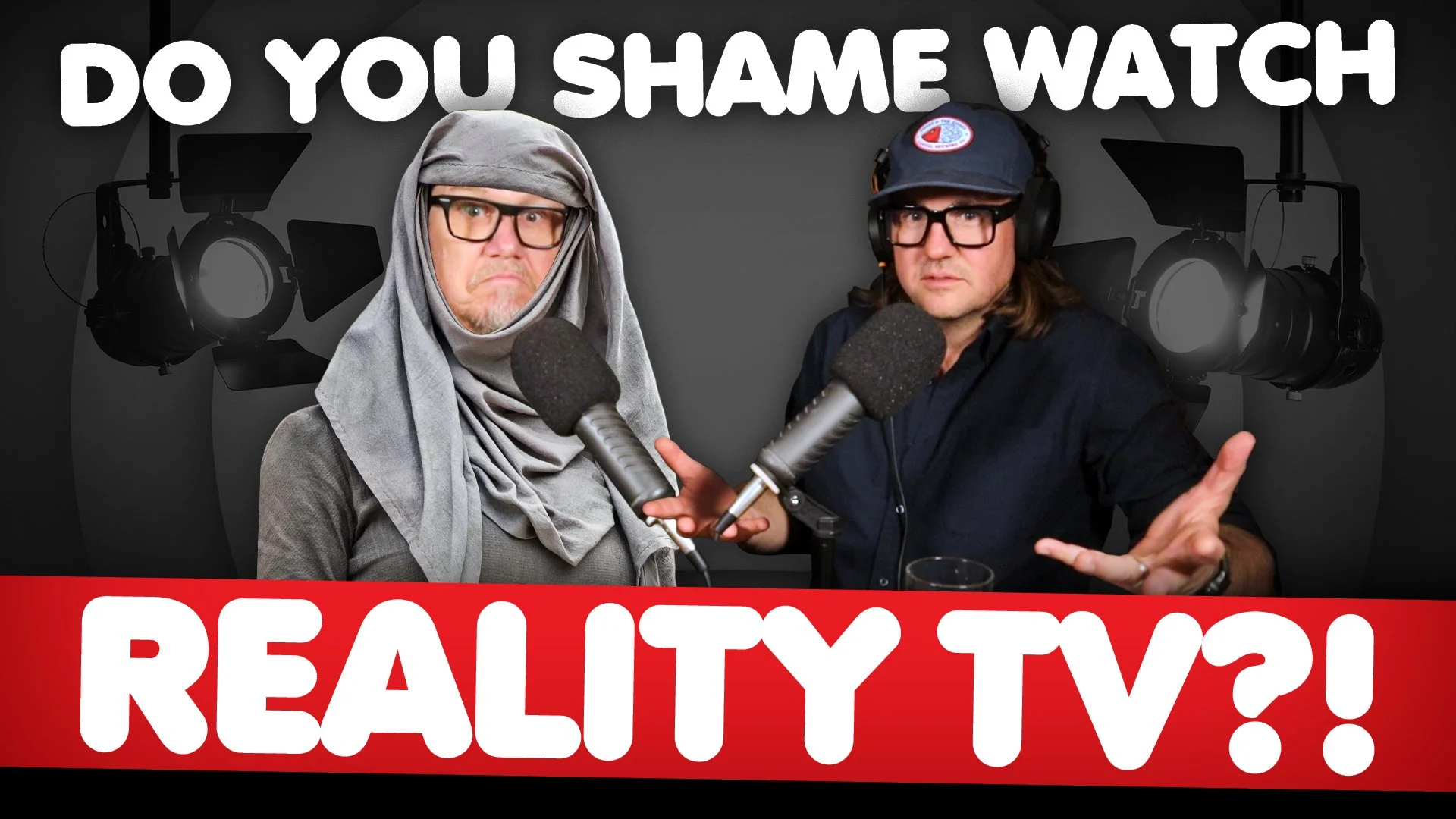
Reality TV is a genre that has wormed its way into our screens, our culture, and—for many of us—our guilty pleasures. While some might dismiss these shows as frivolous entertainment (we’re using the term “entertainment” generously here), maybe there’s more to it than good old fashioned wife swapping, marrying strangers and surviving in the wild with nothing but a six-pack and an epic tan.
Perhaps reality TV is so popular because it holds up a mirror to society, showcasing the full spectrum of human emotions. Watching real people in real situations causes us to reflect on our own life choices and experiences. Or perhaps it’s all completely fake, scripted rubbish that makes the producers a hell of a lot of money. As a writer of The Simpsons, Dana Gould put it, reality TV is “people who aren’t actors working with people who aren’t writers in an amateur production of nothing.”
That might explain why there is so much shame attached to watching reality TV. A 2019 Australian survey revealed that 66% of Australians watch reality TV dating shows but 34% of people lie about it. Closet watchers! Of the people who lied about their viewing pleasures, 74% of them say they did so because they felt ashamed.
What’s the shame in watching ‘Who’s Your Daddy’, a show where 8 men tried to convince actress T.J. Myers (who was adopted as a baby) that they were her biological father? The real clincher was if she guessed it right, she got $100k but if she was wrong, the guy who convinced her got the cash. Spoiler alert, she guessed wrong. And the show was not a hit.
Maybe Born in the Wild is more your thing. This reality show sends pregnant couples to remote locations far from modern trappings like hospitals with only Mother Nature’s tender embrace to assist the birthing process. It’s raw, it’s rugged, and it’s pretty much an insurance nightmare waiting to happen. Prime viewing. No shame in that.
But how “real” is reality TV… really? Producers often set up scenarios or edit footage to shape narratives, sometimes even providing participants with scripts or prompts to ensure a storyline develops. This blurring of lines carries its own ethical quandaries. Are participants being manipulated? Are viewers being misled? The uneasy truth is that reality TV is often meticulously crafted to appear spontaneous, while in reality (pun intended), it’s anything but.
And then there are some shows that have undeniably crossed ethical lines. The Contestant, a Japanese show in the late '90s, forced aspiring comedian Tomoaki Hamatsu, to endure 15 months in near-isolation, living only off sweepstakes wins—a scenario so extreme that it feels more akin to psychological torture than entertainment. Did we mention he was naked? Oh, and he didn’t know he was being streamed live on television. That’s not just ethically murky. That’s plain wrong.
Closer to home, shows like "Intervention" and "Hoarders" can quickly go from entertainment to downright tragic. While these programs claim to offer help to their participants, they also raise questions about exploitation and consent. Is it truly ethical to film someone’s lowest moments for public consumption? And is someone who literally eats her own shit truly able to give consent?
At the end of the day, reality TV is a mixed bag. It’s entertaining (for some), and while occasionally egregious in its ethical lapses, it’s sometimes educational. As for The Wholesome Verdict, well, as long as it’s not demonstrably horrible to people, we say why not?
But next time you catch yourself glued to an outrageous “reality” show, remember that what you’re watching is meticulously edited, partially scripted, and entirely designed to captivate. It's not purely real, but it's real enough to keep us all coming back for more. And in this age of high realism and higher scepticism, maybe that’s precisely what we need.
SOURCES:
"Born in the Wild": Lifetime TV has lost its mind | Salon.com
https://www.pedestrian.tv/entertainment/absolutely-bonkers-reality-shows/
How Reality Shows Affect Our Lives and Society | Psychology Today Australia
Reality TV Has Reshaped Our World, Whether We Like It or Not
Why are people so embarrassed to say they love reality TV? - ABC News
Full article: The Voice: non-disclosure agreements and the hidden political economy of reality TV
The New Quiz Show Scandal -- Reality Television - Los Angeles Times
https://www.digitalspy.com/tv/reality-tv/a823156/most-dangerous-reality-shows-ever/
-
[00:00:00] Rod: So I was reading an article on a reality TV show saying like, show me your worst, like what's the craziest. And there are many. And one of the first ones that came out was an article on a show called Born in the Wild, which I think I mentioned to you. It's a reality show in which couples choose to give birth in the remote outdoors.
[00:00:17] Will: Just to test the language here. I know that we, in the modern way, share pregnancy, you know, we can say we are pregnant, you know, but deep down one person is pregnant and deep down the couple is not giving birth. The child bearer is giving the birth.
[00:00:30] Rod: The human with the child within their tum. So, but it says, you know, couples chose.
[00:00:36] Will: Okay.
[00:00:36] Rod: As you say, because you know, we are pregnant, et cetera. So allegedly they're a long way from modern trappings, particularly things like, you know, a hospital, et cetera. And so the production company Lifetime, their press release said, no inductions. No epidurals, just expectant mothers facing and giving birth in the arms of Mother Nature, capital M, capital N.
[00:00:54] Will: You know, six months later, everyone ended up in jail.
[00:00:56] Rod: Or dead.
[00:00:57] Will: Dead or jail.
[00:00:58] Rod: We ate the baby. So, apparently there's a lot of, there are many stories on this show and one of the quotes was there's a lot of screaming and obscured nether regions as the couples then meander towards the grand result. And one couple, Peter and Audrey, they decided to have their third child in the Alaskan wilderness, 150 miles from the nearest hospital.
[00:01:22] Will: I'm choosing city garden or something like that. If I got to do it outside, that's where I'm going. That's where I'm going. Not Alaska. Love you, Alaska. It's great, but it feels a little bit chilly.
[00:01:34] Rod: If you could see past her kneeling down naked and screaming near a river, you could see that Alaska is quite pretty. For thousands of years, he says Peter, women have given birth without doctors or drugs, so that's fine.
[00:01:43] Will: Sure. For thousands of years, we didn't make it out of childbirth.
[00:01:47] Rod: Or to fifty. Forty even. So it's fine. And Peter also went on to say in one interview, We're not something odd. They did get to have a midwife there, apparently.
[00:01:56] Will: Okay. So just are they the only ones that participated in this reality show? Or was this like a, we're going to get 30 couples. Now it's going to go out and it's like big brother cameras are on.
[00:02:06] Rod: Not all at once. Although that would be magnificent. Along the edge of the grand Canyon. And birth.
[00:02:10] Will: Oh Jesus. Jesus Christ.
[00:02:12] Rod: It's the wild. No, I think it's, it seems to be one episode per us giving birth.
[00:02:20] Will: Okay, so it's not a race or anything like that.
[00:02:24] Rod: I wish it was. Hurry, come on. I can only see the head. This guy's got an elbow out. Jesus. No. It wasn't like that. Also, they're very ambiguous. Other than saying there's a midwife, they're pretty ambiguous about what other, let's say, contingencies are in place behind the camera.
[00:02:41] Will: Audio equipment.
[00:02:42] Rod: Yep. Probably a full, like, medical, what do you, like a MASH unit.
[00:02:46] Will: For the camera people.
[00:02:47] Rod: Well, cause they get very stressed. They worry.
[00:02:49] Will: Wait, wait. Are you saying that this contrived reality show
[00:02:54] Rod: I didn't say contrived.
[00:02:55] Will: Okay. Wait. Okay. So this let's go have birth in the wilderness experience may not be a full reflection, a perfect reflection of nature read into
[00:03:05] Rod: in all her majesty. Perhaps not. Perhaps there may be extra bits. So, but anyway, it got me thinking in general, kind of reality TV. How real is it? Why is it so popular? Can it go too far? Are there benefits beyond money? And of course, in order to do this properly occasionally, we're gonna have to stop and chat about a couple of shows.
[00:03:35] Will: Welcome to the wholesome show.
[00:03:38] Rod: A podcast in which we knock off early.
[00:03:42] Will: We're academics. We knock off early.
[00:03:43] Rod: We knock off early. Which we always do.
[00:03:45] Will: Grab a beer.
[00:03:46] Rod: Or two. And dive down a rabbit hole.
[00:03:48] Will: A rabbit hole. A rabbit hole of reality TV.
[00:03:50] Rod: What a rabbit hole. And there are rabbit holes within rabbit holes.
[00:03:53] Will: Oh my god. I'm Will Grant.
[00:03:55] Rod: I'm Ron Lamberts. And I was not born in the wild. Obviously, hit us up with any of your stories of being born in the wild, we're very interested in that. You know, comments below, or cheers@wholesome.com. Very interested in hearing that. Will's gonna write his after this.
[00:04:09] Will: Oh my god, what, what, what lets this guy on the internet? Oh my god, why is he allowed on the internet?
[00:04:14] Rod: You'll find me on Truth Social. Alright, so what do we mean? Let's talk about what we mean first. What is reality TV? And this is of course, not a tiny question. Apparently it began in 1948.
[00:04:24] Will: What?
[00:04:25] Rod: America. Candid camera. Which was originally a candid microphone. And then it went to camera.
[00:04:30] Will: Oh no, there was Candid Newspaper.
[00:04:32] Rod: Yes, that's right. Candid Papyrus Scroll.
[00:04:34] Will: Yeah, back in ancient Egypt, there was, the scribes would sit behind you and write things out.
[00:04:39] Rod: They'd go bleh and freak you out. So for those of you who are younger than heaps that was run by, hosted by Alan Funt, which is a great name. And basically they'd set up bizarre situations and then someone would freak people out in some way, often quite banal, but enough to make you go, that's weird. And then they'd say, smile, you're on candid camera. So generally though, reality TV, it's pretty much generically, they're not usually actors, unless it's like throw an actor in a dog pit with sharks.
[00:05:08] Put them in situations that create drama, tension, mayhem, awkwardness, and or often, competition. Then you record a buttload of footage and sort it out in post. That's the rough gist. A quote from Forbes magazine. It's for people with the avid interest of seeing a very close up and seemingly authentic view of people's lives.
[00:05:29] But of course, why trust Forbes when you can get psychology today who talk observational psychology class without lectures or exams. My favorite though, really, and this is actually a good definition, nonfiction, but with a narrative arc, I think that's sociologist of such things. And it's true, like nonfiction narrative arc, everything else it seems to be, it could be quite up for grabs and there often seems to be a lot of blurring between documentary, docu series, game show, reality TV, other and misc. So we're kind of in the area of they're not really actors. Things might get random, see what plays out. Okay. More or less unscripted, although sometimes more, sometimes less.
[00:06:09] Will: Are you a, you're a reality TV watcher?
[00:06:11] Rod: Well, I've watched a couple, not for a while. I watched master chef when it first came out.
[00:06:15] Will: Listen, this is like, you're giving me a definition of reality TV and you've seen one reality TV ever. Jesus.
[00:06:21] Rod: None of these are my definitions. Come on. This is a scholarly podcast. I watched a, I think I watched the first season or two of master chef and I watched a survivor or two in the early days, obviously cause hot people on it and the fighting. What about you?
[00:06:33] Will: Oh, it's not a lot because I'm, I don't know, you know,
[00:06:36] Rod: you're an intellectual
[00:06:36] Will: you know, well, you know, I'm not good at TV as I have, as I've told you before, I don't know how to do it.
[00:06:42] Rod: You can't do TV
[00:06:43] Will: You know, there's been a bunch of seasons over the years of different things. Going back most recently, very couple of seasons of alone. That's the one, it's like Survivor, but it's real. You know, we put them out in the bushes.
[00:06:51] Rod: Just you, a piece of wood and some kind of hat.
[00:06:54] Will: Murder some animals.
[00:06:55] Rod: And live for a year.
[00:06:56] Will: Yeah, exactly. Not quite a year.
[00:06:57] Rod: Or live longer than anyone else. Isn't that it?
[00:06:59] Will: That, you know, cause I got pretensions that I would be basically that person except for my inability to be on my own. I would make it to like whatever number of days, except for my inability to be on my own.
[00:07:11] Rod: Can I be on alone, but with friends?
[00:07:12] Will: Yeah, exactly. I'll be way better.
[00:07:14] Rod: Alone brackets with friends, the far less successful followup. Well, let's before we dive further into all these things, so the definition is fairly rough, but it's you know, when you see it, of course, you know, when you see it, I'm going to give you a little test. There's going to be a couple of these. Tell me which one of these two shows is real.
[00:07:30] Will: Okay.
[00:07:31] Rod: Trade your baby or bet on your baby.
[00:07:35] Will: Real?
[00:07:36] Rod: Actually made.
[00:07:37] Will: Well, I think it's going to be bet on your baby. Because trade your baby sounds a little bit, I don't feel like that can be legal.
[00:07:44] Rod: Is it wrong for me to say it depends on which country?
[00:07:46] Will: But I feel like even like, you know, the wife swap where, you know, swap for a week. I don't really think it would be ethical to swap. who is swapping their baby out with someone else for a week and let's have them look after. No. So I think it's bet on your baby.
[00:07:59] Rod: It is bet on your baby.
[00:08:00] Will: What are we betting on here? It's like baby races.
[00:08:03] Rod: Kind of the premise is you get each episode, you've got five families with a toddler between two and three and a half. They're not a baby.
[00:08:10] Will: Yeah. Fuck off. This is bet on your toddler. You know it is technical term here
[00:08:13] Rod: they ran with alliteration 'cause bet on your toddler doesn't both start with B bet on your bottler. Doesn't make sense.
[00:08:18] Will: Trade your toddler would've been okay.
[00:08:20] Rod: That's true. You need a word for compete. What's the word?
[00:08:22] Will: Tabs on the toddler or
[00:08:25] Rod: try harder.
[00:08:26] Will: Test the toddler.
[00:08:27] Rod: Test the toddler. There you go. You really, you're testing the parents. So you've got five families with a kid and they play to see who can guess what their child will do under these certain scenarios so you can win money for their college fund.
[00:08:38] Will: Ah, okay. So it's ethical.
[00:08:40] Rod: Fucking college fund. Otherwise your kid is going to become a glass eater.
[00:08:44] Will: So is this like, we've put a sausage and a broccoli in front of them and guess which one they're going to eat? Like, is this what it is?
[00:08:51] Rod: Well, there's three rounds. First round, right? So one member of the family, like one parent and the toddler bugger off to the, what do they call it? The baby dome to perform a challenge.
[00:09:01] Will: That was the prequel to Mad Max.
[00:09:02] Rod: Yeah. Baby Dome. Less stabbing. Mostly. And so the other parent stays behind, has to decide, they have to choose what they think the toddler will do in this grueling challenge. Okay. The challenge includes things like how many times the kid might spin around or how many cookies they will stack before they eat one.
[00:09:20] Grueling shit. But so you kind of go, okay, I reckon my kid will stack none and eat straight away, or, you know, 114. So that's pretty grueling. And whoever wins that, if they, if the parents get it right, they get five grand for college. Second round, both parents are shown a clip of the conversation between host and all the toddlers, they're talking about a secret word, a keyword.
[00:09:41] And the host and the toddlers will discuss the word, but they won't say the word, so, you know, nudge around it.
[00:09:45] And the families buzz in when they've worked out what the word is, and the first correct answer gets to go to the college round.
[00:09:50] Will: Given that I haven't heard of this before, what country?
[00:09:52] Rod: America.
[00:09:53] Will: And did anyone watch it? Because this doesn't sound great.
[00:09:56] Rod: It's got a couple of seasons at least. There's YouTube shots. College round. The final round. Winning family is shown ten piggy banks. Are we allowed to call them piggy banks anymore, or is that wrong?
[00:10:06] Will: No, that's fine.
[00:10:07] Rod: They're not called like animal shaped money receptacles.
[00:10:10] Will: Calm down, captain cancel culture. Like, oh, I'm so worried.
[00:10:13] Rod: I'm not cancelling no one, man. So anyway, each is holding a different value of money up to, from 500 to 50, 000 is the college thing. And they're allowed to smash up to four piggy banks. And each time when they smash it, if it ain't 50 grand, they can decide whether to keep the money or keep smashing.
[00:10:28] Will: Yeah, like deal or no deal.
[00:10:31] Rod: Yeah. But with smashing and toddlers and words like apothecary.
[00:10:37] Will: And so basically the toddler smashes until a who decides the toddler decides or the parents?
[00:10:41] Rod: The toddler decides. Do you want five grand or smash another thing? Smash another thing!
[00:10:45] Will: It really doesn't sound like great.
[00:10:47] Rod: How many toddlers wouldn't keep smashing?
[00:10:49] Will: You tell them not to and they stop.
[00:10:51] Rod: That's not part of the game. Would you like 5, 000, a concept you don't really understand, or to smash something?
[00:10:57] Will: Look, I'm just saying this doesn't make great TV.
[00:10:59] Rod: Anyway, that's one. Well, you did well. You picked the real one. Yeah. Now we're talking about how real reality TV is. So there's a bunch of, you know, stuff about this. So there was a time magazine poll. Let's start with audiences.
[00:11:11] Time magazine poll, early 2000s, 30 percent of the respondents being asked, well, many things about reality TV believed though, basically real, they're reflecting the reality of the scenarios being depicted. So a third of Americans, roughly 25 percent of them thought the programs are not real at all, like completely fake. None of it real. So this is a kind of gist of it. Basically fully made up, but a lot of people suspect it's at least some way manipulated, which of course it fucking is, because can you imagine survivor and they film them sleeping?
[00:11:39] Will: Yeah, but it depends on what you mean by real, like, you know, maybe everything is scripted
[00:11:44] Rod: everything is real, man. But so of course they edit, of course, I at least take out boring bits the bits aren't key to the competition, the drama, whatever. But then of course, editing might also involve rearranging the order of events. May or may not. It might, you know, it depends on the show and the attitude. So like, who knows what's going on also just off camera, like with born in the wild, maybe there's a helicopter fueled up and ready to run if the baby comes out sideways or something, or it doesn't come out at all.
[00:12:11] But so I reckon the bigger issue for a lot of people is when people claim it's authentic and untouched. So it's not whether it's really real. It's whether people are bullshitting you
[00:12:19] Will: mmm, like what? Like, what's an example of that?
[00:12:22] Rod: There was a book that was talked about in the LA Times, the new quiz show scandal reality television. So, you know, there were quiz show scandals in the fifties or sixties about people rigging.
[00:12:33] Will: Yeah. Like, like, rigging it for a particular contestant to win.
[00:12:37] Rod: Yeah. Because they had the right colored hair or something.
[00:12:39] Will: I do like the idea of TV shows being that cynical about it all and going no we want this person to win for reasons. I love it.
[00:12:48] Rod: Everyone's going to hate this person. They should win because who's not going to watch ?So in this article, the LA Times, one of the comments is through sources I cannot reveal, but would definitely not go to jail to protect either, I got hold of a 19 page single space typed outline of an upcoming episode of Queer Eye for the Straight Eye. So the original Queer Eye.
[00:13:07] Will: Yeah. Like the early 2000s.
[00:13:09] Rod: Early 2000s. Yeah. We said every moment is planned in advance, including a few specific lines for the straight guy to deliver. And Bravo, the company that made it said, Oh, that's not unusual for a reality show.
[00:13:18] Will: Okay. So pretending to not be scripted and spontaneous, but it actually is
[00:13:23] Rod: at least in this case. So some shows also they have screenwriters.
[00:13:27] Will: The thing I worry about that and not worry, but if I'm a producer getting the, is there a term for this? The real person. So, you know, the straight guy in this scenario where the regular hosts come in and then there's the star of that episode, the Rube. I wonder about their ability to deliver the lines on time to convincingly look like they're actually, Oh, welcome to my house. I'm totally surprised to see the cameras turning up.
[00:13:50] Rod: Take 809. Straight guy.
[00:13:53] Will: Sure. Why not? Try for spontaneous first. And then if it's fucked, run it again.
[00:13:57] Rod: Or not care. Like if the guy goes, hi, welcome, no one's going to care.
[00:14:00] Will: No, it's American TV. They need enthusiasm.
[00:14:03] Rod: So yeah, some of them have screenwriters to at least do a general storyline, etc. But they tend to call them things like story editors or segment producers. They don't tend to call them writers.
[00:14:11] Will: But at what point are they doing this? Is it afterwards where they're choosing the bit of story editing?
[00:14:16] Rod: Sometimes before as well.
[00:14:17] Will: So the before is interesting.
[00:14:19] Rod: And it's not untrue that they might do things like we'll set up a scenario and then kind of push play and watch what happens. So the scenario is created, obviously, but then we see what they do in it.
[00:14:30] So, and of course, a writer's guild person says, look, unscripted does not mean unwritten. Weasel words, but bottom line is, yeah, then we're not telling him everything to say, but we are, you know, scenario izing.
[00:14:40] Will: Which ones? I mean, it depends on which one it is.
[00:14:42] Rod: It does a lot, but there are so many, like, like I said, rabbit holes within rabbit holes. I had no idea. Just in America, but just in the English speaking world
[00:14:50] Will: how many reality shows?
[00:14:52] Rod: Hundreds, if not thousands, like there are fucking shitloads, jaw dropping. And they started, you know, if there's, we're talking going back to the 1940s originally. So there's what that's plot to now that's at about 900 years worth of Possible reality TV. There's a lot. Let's have another test Which one of these is real? Release the hounds or shark infested daughters
[00:15:16] Will: Shark infested daughters. Sadly, I wish there was shark infested daughters, but but I actually think I've seen Release the Hounds.
[00:15:24] Rod: Oh, you've seen it? So, Release the Hounds. The show begins with this disclaimer. The producers would like to thank the families of the participants. No dogs were harmed in the documentation of this event. Contestants then depending, there are many sources on this show contestants on Release the Hounds have to do, quote, a bunch of cooked challenges that leave them Fragile as shit.
[00:15:41] But in the pre release the hounds, and then basically the things they got to do is like, they dig up a grave, which has a maggot infested corpse and it's hard to tell if that's definitely a corpse or not. It is maggots though, but it's gross. It's still gross.
[00:15:52] Will: I don't know. No, fuck off. You know that's been made by a TV producer. That's as easy as shit to do. Dig up a real grave.
[00:15:58] Rod: I reckon I could do a shit a lot easier than actually a maggot infested corpse.
[00:16:00] Will: No. Go out and dig up a real grave of a real human and you're breaking the law and you're being freakishly weird, then I will film that and everyone goes to jail. That at least is
[00:16:11] Rod: and then you follow them.
[00:16:12] Will: And at least it's scary. You end up on a TV show and Hey, dig up this spooky grave. And like, that's not fucking scary. Cause I know the most you've done is put a plastic skeleton in there and some meat like fuck off. That's not scary.
[00:16:22] Rod: It looked pretty gross. That's all. It's gross. And that, or they'll do things like, you know, you've got to be buried alive in a coffin for a while, which is of course me out. That's in the prelude.
[00:16:30] Will: But you know you're safe. This is the thing. This is the thing, you know.
[00:16:32] Rod: That's not about whether I know it. That's being buried alive.
[00:16:35] Will: You inherently know these producers don't want to go to jail, so you're safe.
[00:16:38] Rod: I'll talk about that a bit later. It's hard to find deaths in the shows. Related to them is another story, but in the show it's very difficult to find. So after going through this stuff, one of the contestants is given the opportunity to run a course being chased by, quote, snarling dogs. They're given a head start, but the longer they take to complete the task, the size of the head start shrinks.
[00:16:55] And they carry a backpack with a few thousand pounds in it. And before they run, they're given a choice. Do you want to add extra money, but lose your head start and you're like, lower your head start? And you know, it's like three, 3, 000 pounds, three meters, et cetera. And some episodes, there might be a bag of thousand pounds there.
[00:17:09] Will: And if the dog catches them at all, they lose the money?
[00:17:12] Rod: It mauls them to death.
[00:17:14] Will: No, like in seriousness, you can't like defend yourself from the dog, toss it over the fence and run again. Not saying you should, but I'm just saying it's like a, You get caught
[00:17:22] Rod: you're caught, you're done. Yeah. And so basically once they decide whether they're going to do this, then, you know, dramatically, release the hands, gates open, people start running. And off they go. And then of course they claim that after that, the people who get caught, they get, you know, ripped to shreds.
[00:17:36] Will: So I don't think that's reality. Like, like in the spectrum of given birth in the wilderness and you know, dig up a fake corpse and run away while being chased by wild dogs. That is a game show. That is a game show.
[00:17:46] Rod: But yeah, it seems to fall, they like to call it a reality TV show, which is what I say. It blurs, it really blurs a lot. Okay. So let's get into harms then. Harms, problems, physical issues, psychological issues, et cetera. So physical stuff, I hunted hard to find people who'd actually died on a game show and I had no success. Certainly people getting horribly injured. Oh, so thank God. Well, actually, no, the only death I could find was a dude on Deadliest Catch, which is, you know, fishermen doing crazy stuff.
[00:18:15] He had a massive stroke while he was unloading a bag of crab. He was captain of like a cage of crap. What do they call it? A receptacle of live crab meat. He had a huge stroke, dropped dead. So the show didn't kill him, but they said, oh, they aired it. Of course. But it was okay because there was a tribute special afterwards.
[00:18:34] Will: Yeah, of course. You just go to Fade to Black and
[00:18:37] Rod: We respect and admire Keith and his family. Yeah. And I don't know how I feel about them airing it anyway
[00:18:43] Will: No, it's what he would have wanted. It's what he would have wanted.
[00:18:45] Rod: He was hoping he'd die on TV. But there's, I mean, there's heaps for another one I like. I've never heard of this one. It's called Splash where some dude, American, I assume, famous diving guy, tries to teach celebrities how to do spectacular dives into water. So one, one apparently did this and got a horrifying blood clot in his lung and was left, you know, in intensive care.
[00:19:04] A couple of others. Only one I'd heard of, Nicole Eggert, who was, you know, a Baywatch girl, et cetera. They were left with apparently shocking bruises and stuff, contusions all over their bodies from
[00:19:14] Will: this is where you don't laugh. This is where you go, Ooh, ouch.
[00:19:17] Rod: They chose. Signed up. I'm a celebrity. Sure. I'm going to dive into water in a dumb way that I've never done before. Cause water's not at all like concrete
[00:19:24] Will: unprotected by any ethical at all company.
[00:19:26] Rod: Oh, we'll get to ethics. Yeah. Yeah. Yeah, of course I'm laughing because I think, God, your poor career must have been really squeaking along. We're going to get you to jump in some kind of weird pike fashion with 10 meter diving board and you've never done it before, but the cameras will be rolling.
[00:19:41] Will: But this goes back to, this goes back to, you know, feeling like the TV is protecting you. And I think they're protecting you from digging up a live grave because they're like, they don't have the guts to actually descend into go and dig up an actual grave.
[00:19:53] And so they're going to make a little fake scenario and who cares? Yeah. Yeah. Yeah. But they're also going to be incompetent and they're not going to be able to set you up in a proper diving scenario.
[00:20:01] Rod: Well, they're competent enough to injure people. Of course, a lot of this stuff is mental health matters. And I mean, I'll flag it up front. Jesus, there seem to be a lot of suicides after, particularly among contestants who've done so after being competitors. There seems to be a shitload of that. I'm not going to dive into details because we don't need to know that, but There's a lot.
[00:20:23] Will: Yeah. Yeah. I have had, I've heard particularly the, I mean, not particularly, but some of the very celebrity oriented ones you know, like, yeah, we're going to watch you big brother style for ages putting a lot of pressure on people.
[00:20:34] Rod: Yeah. And I mean, look, we are deep up in our elbows in shame culture, and this is just asking to be shamed in front of bajillions of people. And yeah, so that's a bit rough to say the least, but there also, there's some psychologists who've linked higher narcissism in individuals. who are particularly and regularly exposed to reality TV folk who are very narcissistic as well. Another one general time magazine did a huge report on this stuff, sort of, 2010s ish or a bit early teens. Reality shows, they say, or they summarise, exacerbate body anxiety, increase physical aggression and mess with our expectations for romantic relationships. And I think that's fair. If you're really a huge absorber of, you know, these dating shows and in their myriad variations.
[00:21:16] Will: You're going to expect to give birth in the wild.
[00:21:18] Rod: Yeah, or you can expect your first date, you turn up naked because that's what they did in Dating Nerd. You're like, is this wrong?
[00:21:23] Will: Or if you're successful in a date, you'll get the rose or not get the rose.
[00:21:27] Rod: In this book, Reality Bites Back, The Troubling Truth About Guilty Pleasures Television. The author goes to say reality programming has the power to influence our notions of normalcy versus difference, convince us that certain behaviors are innate for different groups of people and present culturally constructed norms of gender, race, class, sexuality, et cetera.
[00:21:48] Will: Wait, are they, are they arguing that TV might be an influence on culture? And so this desire to, to show a certain slice or what?
[00:21:57] Rod: May have an effect. I know. And they say, look, you know, shows are often edited to reinforce stereotypes, vapid blonde, angry black person, sassy gay man, docu soaps thriving on the idea that women are vain little gossips.
[00:22:09] Will: But just go on the edited thing there. How much is it editing versus
[00:22:14] Rod: most people actually are?
[00:22:15] Will: No, not those people actually are, but I suspect I've had, I've heard before that people will also, play up to a role, like, like once they might be seen in a certain way, then they will turn up that element of themselves that may be lingering or may not be there but turning it up, it's a performance thing.
[00:22:33] Rod: Absolutely. So, and also now that reality TV is so entrenched in, you know, popular mindsets and cultures, you know, people go on reality TV cause they're hoping it might make them famous for, you know, beyond the show. So of course you're going to play up whatever your thing is, monster, babe, idiot, whatever it may be.
[00:22:49] They also suggest that often people with disabilities are treated like freak shows, you know, freak show fodder. Not untrue. Actually, yeah, that's one of the reality TV shows I've often watched compulsively in the past. My 600 pound life, humongously large people.
[00:23:05] Will: Medical, well, less game show type thing.
[00:23:07] Rod: Entirely less game show. But particularly, because I'm just amazed at what the human body can do. And these enormous people
[00:23:12] Will: Are you saying there's a direct line between freak shows of a hundred years ago and these shows now?
[00:23:18] Rod: I reckon it's not unreasonable to suggest that in some cases, absolutely. I mean, there's no way, like, I'm not proud of watching my 600 pound life, but I am fascinated. I'm like, it's amazing a human body can get to be that shape and size.
[00:23:30] Will: You're being very scientific about this.
[00:23:31] Rod: I am. I'm trying to be a decent human. What is following someone with a camera versus reality TV. Are they different? And arguably it's difficult to say. I mean, the lines do blur. The lines definitely blur. Like why is Jeopardy a game show and what is it? Bash my toddler for money. Not a game show. Why is that a reality TV? You're shaking your head because you don't know either?
[00:23:54] Will: I'm shaking my head for something. I'm shaking my head for something. Well, look maybe you could say in a docu series in some sense the point of documentaries might not know what's going to happen in advance. Like you don't know the story, so you're capturing things. Whereas you can imagine a more reality show is like, okay, we've got a good idea of the sorts of arcs that are going to happen here.
[00:24:13] Rod: Well, so, and that's a good point. So my 600 pound life, every time the arc is very large people like dangerously large and, you know, disabled from their size. Always, it's partially produced, I think, by this bariatric surgeon dude. Strange little sort of gremlin of a bloke. So, what happens is they go and see him. He's sort of very frank and fearless that they even, you know, come back to me after you've lost on your own X number of pounds and then we'll do surgery and then they go and do whatever, and they're followed by the camera and then they come back.
[00:24:42] I think every time they end up getting the surgery, most times they get the surgery and then you see what happens. So they're both, we know it's going to happen. They're going to talk to the surgeon. They will probably get the surgery, that's known, but the rest of it is like kind of documentary ish.
[00:24:57] So it's very muddy. It's very muddy. Cause we know there's a story arc to this. Every episode has a story arc, but the rest of it, There's also unexpected things that I think are interesting. I mean, we'll get, I want to talk about ethics and consent just in a tick, but here's what I didn't expect.
[00:25:12] And it came from an educational and academic source. The notion of non disclosure agreements and the effect it's had on cultural and creative industries was covered 2020 in a journal that I won't get into, but you can find it in the show notes. And they were saying, in this paper, I present non disclosure agreements as a mechanism used in reality television and throughout society, no less, for powerful wealthy interests to silence subordinates.
[00:25:33] And they studied the voice, this American show, as their case study. They're not saying it's particularly egregious, it's one of the many. Demonstrates how the show conceals precarious and exploitative labor practices. And there are a bunch of stories about NDAs and how serious they can be.
[00:25:49] Will: Give me the voice. So, people, they go on as a contestant, they sing badly or well, and they're not allowed to talk about their experience unless
[00:25:56] Rod: how the judging actually works, et cetera, et cetera. Like thinking behind the scenes must be completely out off bounds. And the kind of numbers they're things like, you know, half a million dollars penalties for every instance in which they disclose information about the show's business practices, so the penalties are enormous
[00:26:14] Will: but clearly the show itself is saying we control the narrative here. You're not allowed to go out there and either film yourself and put it on Instagram or something like that or talk about this to anyone else. You're not allowed to have any input
[00:26:27] Rod: reveal nothing that we don't reveal ourselves through the show. So NDAs became something that people were focusing even more on an argument is, you know, they're really exemplified here in reality TV shows, at least in the US, which is quite interesting. But I mean, just to, we've got to obviously touch on ethics and consent.
[00:26:44] And I used to joke around in the early days of studying psych. I was like, I don't want to become an academic. I want to go and work for McDonald's reality TV show cause there's no ethics committees so we can fuck with people however we want. I didn't end up doing that because I'm actually a moral man.
[00:26:58] As you pointed out, you know, I'm just a big talking chicken. I don't want to hurt anyone. So the one that I think is really interesting, the early days of reality TV were obviously pretty wild west. There's a Japanese one, 1998. So there's an aspiring comedian, a guy called Tamaaki Hamatsu, or his nickname was Nasubi, which means eggplant.
[00:27:21] Because apparently he has a long face, not purple, and he's not good in Masaka. Nasubi. So he auditioned for this show in 98 called Susunu! Denpa Shōnen, and there were no contracts, nothing, just a bunch of personalities, and let's throw him in a room, let's see what happens. So he gets on to do his audition, and he's described as short hair, wide eyed, and near blinding smile. He won the audition.
[00:27:45] Will: Okay, what was, what did he have to do?
[00:27:47] Rod: So I don't know what his audition was, but here's what he got for winning the audition. He didn't know it was coming. Like they didn't tell us, it's like you won. You're in the show. It's on. It's on. So he's blindfolded, taken straight from the audition to a studio apartment in Tokyo.
[00:28:00] It had nothing in it, but a camera, a table, a radio, a phone, and a cushion with a bunch of magazines. They don't specify the magazines. He's ordered to strip naked. So that's the setup. You're interested.
[00:28:12] You hate yourself, but you're interested so his job, he had to obtain everything he needed, clothes, food, entertainment, anything via magazine sweepstakes contests.
[00:28:26] Will: I like the idea of you've got to enter all. Okay. That's so weird.
[00:28:30] Rod: And it stopped when he won the equivalent of a million yen. So 8, 000 us, it seems at the time. So the producer says, look, there's a whole documentary about this show with this guy now, you know, 25 years later called the contestant.
[00:28:47] So apparently the producer, once they set up the premise, made up a lot of shit as he went along. And he said, if you drop anyone into any situation, give them a task and then capture it on camera. Actually, all humans are entertaining. Boy is entertaining a strong word there.
[00:29:00] Will: I can believe, like, I'm sure there is some good content there. I've probably, it's probably took a lot of hours of footage to get. Who's sitting around though? Who's sitting around there going, you know, you're reading a magazine, you're going, oh, there's a magazine sweepstakes. You know what would be great? Let's make a naked dude sit in a room and survive off magazine sweepstakes.
[00:29:18] Like who? I mean, I mean, there's also, there, there is the bit where you go why did he have to be naked? Like.
[00:29:25] Rod: Cause he had to start from scratch.
[00:29:27] Will: But he's not, he's got a cushion.
[00:29:28] Rod: It's like he was born in the wild.
[00:29:29] Will: He had a cushion.
[00:29:30] Rod: He did have a cushion and magazines. So he ended up being naked through the whole series because he never won clothes he could actually wear.
[00:29:38] So the producers would put in an eggplant image over his ding dong. And someone tried to claim that's where the eggplant emoji looking like a dick came from. It's like, no, it just looks like a dick dude. But anyway he said at the end, after he'd been through this stuff and he was being interviewed later, he said, there was a big hole in my heart because humans could be so cruel just in order to make an interesting popular program. To get the popularity. It looks like a comedy, but people don't understand the hardship and all the struggle I went through within the show that what was really going on wasn't shown. It ran for 15 months. He was in that room for 15 months.
[00:30:14] Will: And he never won any clothes?
[00:30:15] Rod: No, none he could wear. So he probably won like, this is a baby's hat and here's a pair of mittens.
[00:30:20] Will: What year was this?
[00:30:21] Rod: 98. So ethics and consent, like, this is a great example of, I don't know, neither? Well, no, he must have consented in some way.
[00:30:32] Will: Did anyone, did anyone get in trouble for this?
[00:30:35] Rod: I don't think so. Because arguably, he agreed. So ethics and consent, I think they're an issue.
[00:30:42] Will: Well, you can't say, one bad apple doth ruin the whole barrel. Yeah, no, I got it wrong there. I got it wrong.
[00:30:49] Rod: That's Mark Twain.
[00:30:50] Will: One bad grape doesn't spoil the bunch. Don't tie me with the feathers of another man's chicken.
[00:30:56] Rod: One idiot does not make a flock of morons.
[00:30:57] Will: There you go. Exactly. So
[00:30:59] Rod: yeah, but this is obviously I'm going to go to an extreme case to make the point and it's from the early days as well, but with the NDAs, non disclosure agreements, plus matters of the people, not necessarily being clear about what they're in for.
[00:31:11] Will: You're going to tell me that some reality TV show practices are not completely ethical.
[00:31:14] Rod: It might not be great for contestants. It's fair to say.
[00:31:17] Will: Finally, the story is out.
[00:31:19] Rod: Yeah. I know, you heard it here, 900th. Okay, your final test. Which one is real? Who's your daddy or date my dad?
[00:31:29] Will: Date my dad, I can see is a real show because that's kind of, I can imagine there's a, you know, there's kids and they're like, my dad's a sad lonely divorce person and I get a, you know, I want to help him. He's a nice guy. Who's your daddy? Okay. That that, that could be. That could be a, you know, picked from a lineup. You're a, you know, so it's, you told us ages ago about you know, those terrible, yeah, terrible sperm donors who have like 700 kids or something like that. And you know, they all meet up and they have a lineup and which guy is your daddy? Both are possible. I'm going to go date my daddy is more likely.
[00:32:00] Rod: Yep. It is who's your daddy? This show Fox Broadcasting Company. So it kicked off with a 90 minute special 2005. It starred an actress who was called T. J. Meyers, or is, she's been in every movie you've never seen or heard of. Because I looked her up and I'm like, I still don't know who you are, but she's an actress, good for her.
[00:32:17] She was adopted as a baby. On the show, eight men tried to convince her they were actually her biological father. One of them actually was?
[00:32:23] Will: No.
[00:32:28] Rod: If she guessed correctly, she gets a hundred grand. If she's wrong, the fellow who convinced her falsely he's the dad gets the hundred grand.
[00:32:36] Will: No. No, no. This is not a thing you should do.
[00:32:41] Rod: No, and I didn't. I'm just reporting on don't shoot the messenger, man.
[00:32:44] Will: No. Sometimes the messenger deserves a bullet in the eyes. You bring stories like this to me. You gotta go like, I'm sorry
[00:32:49] Rod: I do it because I care about your worldly education.
[00:32:52] Will: Which of these scumbags go Oh yeah. Okay. Okay. I'll happily convince someone I'm, their father when I'm not.
[00:33:01] Rod: I think she got it wrong, but she still ended up getting to meet her real dad.
[00:33:04] Will: Well, good.
[00:33:05] Rod: The show's not a hit. It seems like they do maybe four or five more episodes and they aired on some version of Fox and then that was the end of that. You only got one wrong. You got two out of three. You'd be good at this.
[00:33:17] Will: So what was the title?
[00:33:18] Rod: Who's your daddy? Who's your daddy?
[00:33:20] Will: No, it's a good title. No, that, that is the right title for that.
[00:33:22] Rod: Cause it could mean a lot of things.
[00:33:23] Will: No, but it's a phrase from popular culture. Have you heard, it's a thing that people say. And so it might resonate when you say, who's your daddy? And you go, Oh, we can make a whole show about that. We can find people who don't know who their daddy is.
[00:33:35] Rod: Yeah. And surprise them on national TV for money.
[00:33:37] Will: Horrible.
[00:33:38] Rod: The thing I like most about who's your daddy is years ago, triple J comedian, Dave callen? He was saying, ask people what's their favorite Arnold Schwarzenegger quote. And he's like, mine is who is your daddy and what does he do? From kindergarten cop. And I thought that's gold because no one thinks kindergarten cop.
[00:33:54] Will: No, there's some good lines in kindergarten cop.
[00:33:55] Rod: Who's your daddy? What does he do? So snobbery and myths around reality TV. Apparently there's a rank of what's valid and you know, better television, better acting, et cetera.
[00:34:06] Will: Who's doing this ranking?
[00:34:07] Rod: Well, It is the un. It was Boutros Boutros-Ghali and he said, pandemics water, clean water, accessibility, sanitation, and reality tv.
[00:34:15] Will: No, I meant a proper UN within rankings. What is the best style of reality TV show?
[00:34:19] Rod: Yeah. The UN department for Reality tv. And they interviewed at least these two people. So a writer from The Simpsons who summed it up as reality shows, people who aren't actors working with people who aren't writers in an amateur production of nothing.
[00:34:31] Will: They're working for the enemy.
[00:34:33] Rod: George Clooney.
[00:34:34] Will: Again, working for the enemy.
[00:34:36] Rod: He's on TV. He said, theater actors look down on film actors who look down on TV actors. Thank God for reality shows or we wouldn't have anybody to look down on. Oh, George used to have my vote for president, but now.
[00:34:48] Will: It's fair. It's fair.
[00:34:49] Rod: But yeah, there's a hierarchy of what professional folk think of such shows and the people who pilot them. But shame is interesting on the shame of the viewers. So there's, this is an Australian little survey from 2019 and the headline, I think it was in the ABC.
[00:35:07] I caught the survey, but they didn't run it. Aussies love, hate relationship with reality TV. Australians who say they watch reality TV dating shows, and these are particularly the popular ones at the moment or recently, 66 percent say they watch them, 34 percent watch it but lie about it 74 percent say they lie because they're ashamed.
[00:35:30] Two thirds leave the room to watch it alone because they don't want their partner knowing or their housemates or whatever.
[00:35:35] Will: Really? They're like covering up their iPad when they're going to watch it under a blanket. I mean, that's cool. That's cool.
[00:35:43] Rod: 38%. They say they feel fear of missing out if they don't watch shows like, and the one that really stands out is Married at First Sight.
[00:35:50] Will: Yeah. That's big.
[00:35:51] Rod: MAFS is huge. I've seen MAFS.
[00:35:54] Will: I've seen the tweets about MAFS.
[00:35:55] Rod: That's the same thing. I've watched the whole season. I remember thinking, it's just hard work. My problem with most reality TV like that, my wife's a big fan. Like I watched any brain damage sci fi out there and she watches any brain damage reality TV.
[00:36:09] My biggest problem with things like MAFS and the housewives and stuff is they're just angry people that I would never want to meet or hang out with. Particularly the housewives ones. I'm like. You just don't seem to suck. I don't want to know anything about you. You're horrible. You act badly. You whinge about things that don't matter.
[00:36:24] And that's coming from me breaks my brain. But anyway, so there's a lot of, there's a lot of shame about this sort of thing. People lie about The Bachelor Australia, that's 39 percent watch it, but lie.
[00:36:34] Will: No, they're all saying I'm watching highbrow. I'm watching the bear or I'm watching four corners or just the news or, you know, catching up with a small black and white news.
[00:36:42] I'm going through from the fifties onwards. I'm watching Walter Cronkite. There was a relative of mine. He had a stack of the times. He lived in London. So, fair enough. But he had a stack of times. And I think what he would do is, he was well behind. And I think you've been like this on The Economist. Yeah. going along. So he would pick out one every time he got around to reading every day or two or three or four days. And it's like eight years out of date. And he's like, well, it's still readable. It's still the English language.
[00:37:09] Rod: Yeah, exactly. And the crossword is still cryptic. When does reality TV go too far? And this is a question, does it A and B, what are the versions of it? And there's a couple I found hoarders is an interesting one. Have you ever seen hoarders?
[00:37:20] Will: I have. Or I've seen a show, I don't know if it's called that, but it's well, let's go with a docu series where you're investigating the lives of people who have too much stuff.
[00:37:29] Rod: Too much stuff. It's true. And so each episode on the whole, they profile one or two people. They have a psychiatrist or a psychologist, have a professional organiser, and also quite often, or I think all the time, an quote, extreme cleaning specialist. Cause these houses are not, my goodness, you have a lot of shoes. They are, you have to actually, but not in these shows, you have to open the door and climb in over the top of a floor you can't see covered in stuff.
[00:37:55] Will: So, so, I mean, I guess here is the defense that these shows can be a window into different parts of the world and how people live.
[00:38:03] Rod: And look, they're pretty, this one seems to at least try to help these folk who are living in at times quite extreme situations. And they will often follow up. Like, so they help them out with, you know, as I say, cleaners and organizers and psychologists, and they follow up to see how they're going. And so I typed in look, tell me some of the extreme episodes. So season six, episode four came out often on top as the most extreme woman called Shanna, who basically saved everything, including her own feces.
[00:38:32] She'd put in bags or receptacles and keep it. And as they put it, she also ate it. But what goes on to say was the quote is she had no problem living in extremely unsanitary conditions and eating food that she knew was contaminated with her own waste. And when the crew said, what's going on here, she said, well, what difference does it make?
[00:38:53] Now, That's a fascinatingly extreme way of living, but is that too far? Should that be on TV? Is that entertainment?
[00:39:00] Will: No, that should not be. That's one of the ones where you go, that's like where, you know, a contestant dies in your show and you go, well, we don't put that on there.
[00:39:07] I get if something not to do with the show and you can get a bit derogatory but if you don't put things on air that are well beyond the realm of like, I understand that most hoarders probably have places where they could be helped by wider society, but clearly this person is well beyond that.
[00:39:28] Rod: This isn't, I keep too many things.
[00:39:30] Will: No. And I think there's a chunk where you could, you can very easily say, no, that you filmed it. Fine. Okay. You went in thinking it was one thing. You get there and it's a different thing. You don't have to air that. That is not no, I'm sorry. That is the wrong choice. This person should not be on TV.
[00:39:45] Rod: I agree. I think it's too far, but here are two questions then. One, that she consented.
[00:39:50] Will: Oh, fuck off.
[00:39:51] Rod: I know. Two, would people watch?
[00:39:56] Will: Of course. Of course they would. You know, and here's the shame watch. But I'm sorry, she consented? No, does she have full ability to consent here?
[00:40:07] Rod: I know, but yeah, it's a question that should be asked. I agree. I agree. I'll give you one other one.
[00:40:13] Will: Some people can't provide full consent.
[00:40:15] Rod: there is a huge debate, argument, literature, et cetera, about that. How you tell 'em what that looks like.
[00:40:21] Will: But I think even beyond that, I think yes, they did provide consent. And I'm sorry, producers, you spent $50,000 of videographer and whatever. Yeah. Anyway, get rid of it. You go. Yeah. Sorry. That sucks. But we're not broadcasting that. Fuck you scum Broadcasting.
[00:40:36] Rod: How about Intervention? 2005, it started on A& E, that channel that is in America.
[00:40:41] Will: Accident and Emergency?
[00:40:42] Rod: Yeah, it's something else, like Adventure in Elephants or something, I can't remember what A& E stands for, but it had Like, it used to have the modern jousters, which is awesome. That was cool as hell. Fucking awesome.
[00:40:51] Will: No, you watched five minutes and you go, I've seen it all. Literally all I need to see of jousting.
[00:40:57] Rod: But you don't like sport
[00:40:57] Will: and jousting of the sports is a shit sport like it is. I'm sorry. I'm sorry.
[00:41:02] Rod: I'd rather watch jousting than golf.
[00:41:06] Will: Why are we comparing these things? I just think jousting, fucking jousting.
[00:41:10] Rod: So good. Anyway, A& E. So they follow people who are dependent and or addicted to drugs or alcohol they are documented. So filmed knowing that they're probably going to go into an intervention or they are going to go into intervention with family and friends.
[00:41:25] During the intervention, loved ones give the addict an ultimatum, go to an inpatient drug rehabilitation program immediately or else risk losing contact, income, or other privileges. And then the show follows up on the recovery for an episode or two, either for TV or for webs, et cetera. These are people who are addicts, who are given an ultimatum by their friends, family, and loved ones on television.
[00:41:51] Will: So I'm not going to be as hostile to this in the sense that I have seen very revealing. This is where one uses the term documentary. You know, investigations of people's lives who suffering through the middle of a strong addiction, whether it's alcohol or anything else. And no, but those are absolutely important for us as a society to, to know to understand, okay, how much of these people's lives are being driven here.
[00:42:16] And I think there is a difference here in the choices that a producer makes to to reveal a life that is true to what those people believe and their own fears and doubts and hopes and blah, blah, blah, versus let's put it on to see, you know, it's for pure voyeurism. And I know that's very snobby. I don't know, I think there are some benefits to, of course understanding other people.
[00:42:40] Rod: There are. And that's something we'll get to as we close out. But I look I'm not comfortable with either of those. I'd still, I'd more likely watch Hoarders than Intervention because Hoarders is honestly, Hoarders is just so bizarre and Intervention is just like.
[00:42:55] Will: Hoarders in general is interesting. Cause I just think that one episode sounds like it went too far. I think the whole concept of the family doing the intervention. Okay. That's cheap. I think like, let's not try and make it some fake break the family.
[00:43:07] Rod: We're doing it for them.
[00:43:08] Will: No, I think there is justice though, in understanding how people live their lives.
[00:43:12] Rod: Yeah. Well, look, that's one of the things it says. I mean, cause you know, why do we do it? What are they good for? What's the upsides of reality TV shows, because it's easy to bag them out, obviously the shame or the abuse of people, et cetera.
[00:43:25] So there are different arguments that run around. Some are talking about, you know, they cause us to reflect upon what we do in similar situations. Pondering questions of self interest versus self sacrifice that's often common in these shows. This is some great sources. Let's call it American College of Education. Reality shows can have a deeper intention, such as becoming a teaching tool. You probably didn't know that. Shows such as Shark Tank or House Hunters. Are you aware of these two?
[00:43:52] Shark Tank is, I want to make a hat that has a propeller on it. Is anyone going to give me money? And house hunters is people hunting houses. Feral houses though, never domestic ones. And they say it reflects real work situations that can be used as a strategy to improve the pedagogical approach with different teaching styles.
[00:44:10] Will: Meaning?
[00:44:11] Rod: The, by watching shows like that, you might learn stuff. Other US findings, 2015 study found that reality shows could stimulate parts of our brains that handle empathy. And they did an FMRI study, functional magnetic.
[00:44:24] Will: Are you serious?
[00:44:24] Rod: Yeah. So they'd show subjects they call them subjects, participants, clips of embarrassing scenes from reality TV, and then did brain scans and apparently empathy centers lit up more. So that's good? You'll be more empathetic when you watch someone's pants fall down.
[00:44:39] Will: No but compared with what?
[00:44:41] Rod: Other. Non reality TV.
[00:44:43] Will: Here's you watching a bowl of cornflakes. Sit there. No empathy.
[00:44:46] Rod: Because it knows it's going to be eaten.
[00:44:47] Will: Okay. I need more. I need more details on that.
[00:44:50] Rod: I'll give you a better study by Girl Scout Research Institute. 68 percent of the girls surveyed in this study said that when they watched reality TV, it made them feel like they can achieve anything in life. And those who watched these reality shows, they didn't specify which ones in this report, they're almost twice as likely to aspire to leadership
[00:45:10] Will: Which shows were they watching though? Hoarders?
[00:45:13] Rod: Yep, Hoarders, Pimp My Ride
[00:45:16] Will: My 600lb Life?
[00:45:18] Rod: Yeah, and My Very Long Toenail.
[00:45:19] Will: Well, you too can have the Very Long Toenail. Like, it depends on what you're watching.
[00:45:23] Rod: It does. And so also reality TV, some have claimed at least like the National Association of the Advancement of Colored People, the NAACP in the US. They did a study in 2008, they found non white people were underrepresented in almost every part of TV except reality show cast.
[00:45:39] So there's a thin argument that says maybe there's more, less traditional Euro looking people in that than other genres. Okay. Also, look, they make a fuckload of money.
[00:45:52] Will: Do they? Like in terms of how cheap they are per hour of content.
[00:45:55] Rod: Yeah. Huge eyeballs. I mean, there's a reason there's a million of them.
[00:45:59] Will: And it's why also, you know, it's so easy for them to give away a hundred grand, you know, it's like the cost of making an hour of scripted TV, so much shockingly more than an hour of reality TV that giving away a hundred grand is nothing to them.
[00:46:12] Rod: Yeah. My wife was watching the mole and remake of the mole where there's a bunch of people competing for stuff.
[00:46:17] Will: I remember the old version.
[00:46:18] Rod: Yeah. One of the contestants is actually on the side of evil and wants to stuff everyone up. And you've got to guess who the mole is. And as you get it wrong, you
[00:46:25] Will: and is one of them everyone's dad?
[00:46:27] Rod: Yep. Everyone's dad. But what I'd found intriguing, like, yeah, it's TV and they put them in scenarios, whatever, but the prize pool was like, and if you win this one, 5, 000 gets added to the pool. And I'm like, who gives a shit? Make it exciting. Five grand in the end. If everything went super well, the winner gets a hundred thousand and they're in a house for like a month. Make it crazy
[00:46:46] Will: Australian TV producers versus the US
[00:46:49] Rod: no, this was American
[00:46:49] Will: are you serious? Okay. Okay. I thought they had more power
[00:46:52] Rod: to be fair though, one of the harms that, that I didn't touch on that people have commented on is a lot of the reality TV shows worship conspicuous consumption. Yeah, of course. So, I mean, maybe these guys are being good.
[00:47:04] Will: Okay. If you win, you can get a minimum wage throughout the period that you were on the show. Every hour that you were on the show, you get your 17. 15. Yeah.
[00:47:16] Rod: Look also, I mean, one argument is everyday folks get a chance at the limelight they wouldn't normally get. And you know, for some that's gone well. And my bottom line is also like a lot of them are just fucking entertaining. And if people like them, leave it alone. That's fine.
[00:47:29] Will: Fuck off allowed to just like stuff. You're not just allowed to like stuff. The government gets to decide what you're allowed to like.
[00:47:35] Rod: I like a lot of stuff the government doesn't like a lot. So yeah, look, my verdict, how real is reality TV? In some cases, not very, in some cases more than I'd like, but I don't really mind, like I figure as long as it's not demonstrably horrible to people. That's kind of a bit of fun. Fucking fine. Don't worry about it. I mean, what do you think?
[00:47:55] Will: Look I'll end up occasionally on it and there's things that are interesting. I can understand the shame response. I don't necessarily get it because I'm just not good at TV in general.
[00:48:04] Rod: You don't do shame.
[00:48:05] Will: No, I do shame. I do shame. I just don't remember to watch TV.
[00:48:08] Rod: Too ashamed to watch TV.
[00:48:09] Will: Something like that.
[00:48:10] Rod: Yeah. Look, I don't turn on reality TV as a go to. But when I am set in front of it, I don't know if I'm angry quite often with, I don't like the characters in most of the shows, or I'm angry with the fact that I want to know what happens next.
[00:48:23] Will: You got to chill out, man. What else have you been thinking about?
[00:48:27] Rod: Well, I saw an article. Therapists warn that taking magic mushrooms for treatment can lead to unwanted romantic feelings. Like if you get loaded with your therapist, you do your cyclosibans and then you think, How about a little bit of a rummage in the undies as well?
[00:48:42] Will: That's not necessarily romantic.
[00:48:45] Rod: Can be though. You've never had a romantic rummage in the army?
[00:48:48] Will: No, I have, but I think the point, I think the point here, I think the point here is you might actually feel the love, not just the lust.
[00:48:55] Rod: What's the difference? So anyway, I'm curious about the whole, we hear about this, you know, therapists, psychologists, psychiatrists, whatever, should never have intercourse with their patients and blah, blah, blah.
[00:49:05] Will: Are you going to argue there should be a time?
[00:49:07] Rod: No, I'm just curious about like how far do these stories go? What are common variations? Are there more likely ways in which this stuff goes wrong, more likely particular kinds of therapists, etc. I just want to read lewd and salacious papers.
[00:49:21] Will: Look, I hate to tell you. I hate to tell you that there are news stories where these people go to jail. They get struck off.
[00:49:26] Rod: I want to find the good ones.
[00:49:28] Will: There aren't good ones. If there's a story, they aren't the good ones.
[00:49:31] Rod: You know, like the schoolteacher said, look, yeah, there's a 14 year difference but we ended up loving each other.
[00:49:36] Will: Not the good ones. Jesus.
[00:49:39] Rod: Don't any of them go well?
[00:49:40] Will: No!
[00:49:41] Rod: Well, that's just what I was thinking about. I don't want to tell you anymore.
[00:49:44] Will: Jesus! Okay, I got one from listener Alex. You know, he's got obviously a bit of a, how's this all going to end?
[00:49:53] Rod: Doomsday fetish.
[00:49:54] Will: Maybe he's reading that article the other day in the New York Times about the fetish for panic rooms. But what's the most likely apocalypse?
[00:50:01] Rod: I told you. AI nuclear environmental catastrophic virus.
[00:50:07] Will: No I'm afraid it's, it's a failure of governance.
[00:50:09] Rod: Paperwork. Too little or too much?
[00:50:11] Will: It's both. It's both. It's wrong paperwork.
[00:50:13] Rod: Our problem is we have both too much and too little form.
[00:50:18] Will: What else you got?
[00:50:19] Rod: Well, this is a bit specific, but the thing came to my attention because it's been revisited. 1986 Newsweek cover had this piece called, is it too late for Prince Charming? And it was covering a study.
[00:50:33] Will: Hate to say it, but Prince Charming, he's looking for, he's looking for the ladies in the twenties to the thirties.
[00:50:37] Rod: But this one is referring to a study done by, I think it was a Yale and another Ivy league university person. Well, they did a bunch of questionary stuff and they said things like 30 year old white college educated single women had only a 20 percent chance of finding husbands.
[00:50:55] At the age of 40, the probability of finding a husband fell to 2. 6% and something that has come up in popular culture, movies, et cetera. Single 40 year old women were more likely to be killed by a terrorist than find a mate.
[00:51:09] Will: Oh, well, fuck them. No. I mean, as in fuck the people doing these studies and leave these women alone and allow them to decide what the study is that are relevant here. Just get fucked.
[00:51:18] Rod: But so in the spirit of inquiry, I'm curious to know exactly what that study looked like and also how the debunking has gone.
[00:51:24] Will: Can we do a little bit of study with these people and say, do you want to be studied by these people? Or like, are you too spinstery or not? How do you feel about that?
[00:51:32] Rod: I noticed you don't have a man with you.
[00:51:34] Will: Fuck me. They're like,
[00:51:37] Rod: How do you decide who you're allowed to talk to?
[00:51:38] Will: It's weird how many of these studies are, Why are you such a loser? Like, get fucked.
[00:51:43] Rod: But that's one thing, but just say, Don't have a husband at 40, huh? Terrorism. Fucking wild, like, Oh no, no, you're not going to get married, but you are going to get murdered by a terrorist. Like, what the fuck are you talking about?
[00:51:55] Will: So I ended up this actually this reminded me thanks to your discussion of reality TV. And I do wonder if this ever happened. But I ended up in a weird page on
[00:52:04] Rod: who tricked you into it?
[00:52:05] Will: No. This is just a Wikipedia page. This was the one that was describing the first full sexual encounter in a Soviet movie.
[00:52:13] Rod: Actual, like, genital on genital.
[00:52:15] Will: Yeah, I don't, I haven't seen it. I haven't seen it.
[00:52:18] Rod: Let me pushkin you.
[00:52:19] Will: Something like that. So glasnost and perestroika
[00:52:23] Rod: Which one's male and which one's female?
[00:52:24] Will: I don't know. You put your glasnost in your perestroika. But they were, these were the reforms that Mikhail Gorbachev brought in the 80s. And amongst them, there was a widening of the things that you could put on Soviet TV.
[00:52:34] Rod: Thank you for that.
[00:52:36] Will: Right. And so there is, and of course it's a tragedy, like this first full sex scene in the Soviet in Soviet TV. You know, like all sex scenes in America in the 70s and 80s
[00:52:49] Rod: It was just basically like two bushels of wool came together in different colours. Robbed. With furry hats. I'm doing a dance. Easy sex, they cannot tell.
[00:53:02] Will: Well I want to know, I want to know, what was Soviet TV doing before and after? I'm more just interested, were there any reality TV shows on Soviet TV? Were there anything like that?
[00:53:13] Rod: Whatever the chairman says.
[00:53:14] Will: Yeah no, this is the point. They were, this was their free decade in the 80s when they were like, fuck it
[00:53:19] Rod: Let's show pubes, comrade.
[00:53:23] Will: You got any more?
[00:53:24] Rod: No, that's enough for me because I've done a lot of work on you know, bad things.
[00:53:28] Will: Just want one, one final, one final one. You sent me an article, you know, this week, some scientist reckons proof that we live in the multiverse. No simulation. I don't believe it.
[00:53:38] Rod: Read the proof?
[00:53:39] Will: I did. It was,
[00:53:41] Rod: if anyone's going to know it's a poli sci major.
[00:53:44] Will: I can count. I can count. Look, no, I'm not actually talking about the simulation right now, but it did strike a thought for me that there is, I think other people have mentioned this before. You know, the theory of the multiverse and the simulation, that perhaps this universe is not the only universe, that there are other universes, or perhaps there are other timelines.
[00:54:04] But there is a way of approaching the timeline that I, it kind of resonates, and it resonates with the fact that Donald Trump will become president again.
[00:54:13] Rod: Oh, he will.
[00:54:13] Will: It is that a lot of people are saying, we live in the dumbest timeline. Like, at any moment where there is the decision point, where it's like sliding doors and there is the smart choice and the dumb choice, we're in the dumb one.
[00:54:26] Rod: Don't even offer us the option. You know which way we're going to go.
[00:54:28] Will: I don't even know what that means as an episode, but I'm like,
[00:54:31] Rod: I'm happy to, we can look for examples.
[00:54:34] Will: Ah, and maybe we're only the dumbest timeline since some point, you know, you can imagine that we chose smart timeline up until a certain time and then we went bump. Yeah, we've branched off.
[00:54:46] Rod: I also, when I think I hear about multiverses and infinite realities, I'm like, yeah, but how does that help me? Like telling me there could be infinity of you who did better or different things. It's like, thanks.
[00:54:57] Will: Makes you feel inconsequential and small.
[00:55:00] Rod: I already felt that, but it doesn't make me feel better. Well, that's not its job.
[00:55:04] Will: Inconsequential and small.
[00:55:05] Rod: Is that better?
[00:55:06] Will: It's like a teen Nirvana or some shit. I don't know. Thank you to again when I tell you my stutter life who told the story in one of the comments there about paying 40 for a voodoo person to cure their stuttering.
[00:55:19] Rod: Did it work?
[00:55:19] Will: No
[00:55:20] Rod: Really? They should have gone for the 50.
[00:55:22] Will: Well, probably. I don't know what the difference between 40 worth of voodoo and 50 worth of voodoo gets you.
[00:55:27] Rod: You get more chicken blood?
[00:55:29] Will: And and ADL Rope sent in a story about emotional support alligators.
[00:55:33] Rod: Ooh. Does he have one?
[00:55:36] Will: Well, not in Australia. It'd be an emotional support crocodile. I mean, that's what you would have here. Cause we're tougher
[00:55:41] Rod: emotional support king Brown. Who's going to fuck with you when you go to King Brown?
[00:55:45] Will: I'm going to get, I'm going to get a emotional support diprotodon. It's a big wombat. It's the big wombat.
[00:55:50] Rod: You're gonna have to nail four small wombats together because they're dead.
[00:55:53] Will: Send us your topics listen er. What dumb thing can we explore? cheers@wholesomeshow.Com or in the comments.
[00:55:59] Rod: Just downstairs. With the Russian pubes.
[00:56:03] Will: Russian pubes? How many Russian pubes in a babushka doll? Babushka does sound very pubic.
[00:56:08] Rod: My babushka is out of control. I need to visit Wex.