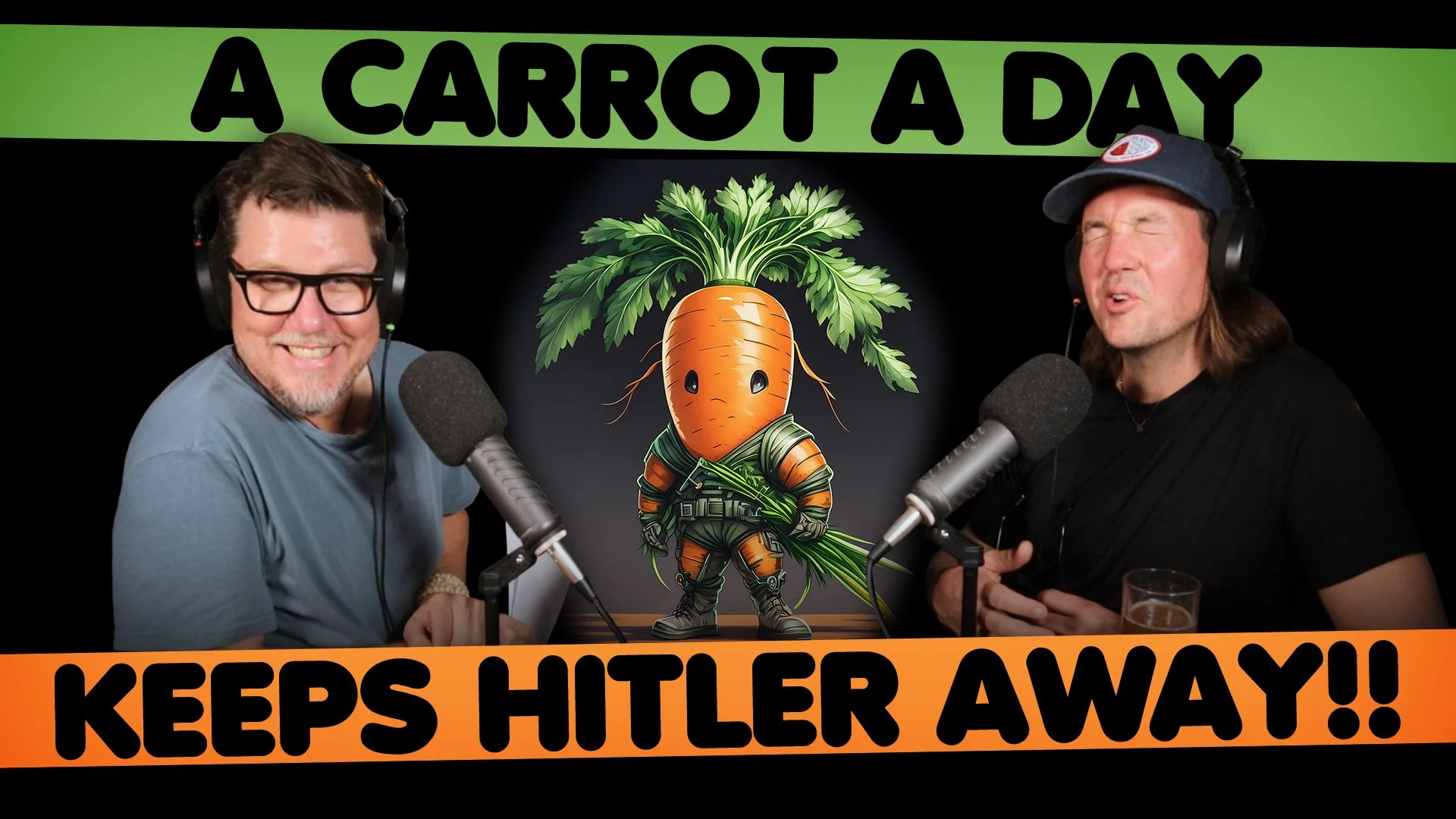
An apple a day keeps the doctor away. Eating carrots makes you see in the dark. We’ve all heard people say this stuff but is there any truth to these old-timey sayings?
Take spinach. In 1870, German chemist, Erich von Wolf examined the amount of iron within spinach but when transcribing the data from his findings, he accidentally misplaced a decimal point. Oopsies. So instead of the actual 3.5 milligrams of iron in a 100-gram serving of spinach, he claimed it was a whopping 35 milligrams. Spinach’s nutritional value became legendary (remember Popeye?) and the American consumption of spinach increased by a third. In 1937 someone rechecked the numbers and found von Wolf’s error, but no one really cared by that point. Spinach had already become a superfood.
So what about carrots? Can they really make you see in the dark? Well, yes, they can certainly help with Nyctalopia (night blindness. It’s an actual thing where some people become staggeringly incapable of seeing in dim light).
The Ancient Egyptians had a cure for night blindness. Just squeeze the juices of a grilled lamb's liver into the eyes of the afflicted person. Ahh those were the days of medicine. The more weird and gross the better! Turns out it worked though because the night-blinded person also ate the liver, which contains a lot of vitamin A. We need vitamin A to make rhodopsin, a photosensitive pigment in the retinal rods that helps you see in dim light. Tadah!
Carrots, you see (pun intended), contain Beta-carotene which our bodies use to synthesise vitamin A. So, eating carrots (and liver for that matter) will improve your night vision to normal levels... But it won’t give you superpowers.
One guy sounded like a superhero for a while, referring to himself as Carrot Man. He ate more than 3 kg of carrots every week but started turning orange and was admitted to hospital with severe constipation. He was all good after a month of eating less carrots. There can be too much of a good thing.
World War II pilots also ate a bunch of carrots. Back then, people were well aware that vitamin A was critical for healthy eyesight. So in 1940, versions of high-carotene strains of carrots were being tested on pilots to reduce night blindness. This was pretty important at the time because during the 1940 Blitzkrieg, the Luftwaffe often struck under the cover of darkness. The British government issued citywide blackouts to make it more difficult for German planes to hit targets, so maximising vision among pilots and civilians was critical.
The year before, the RAF had built the new secret Airborne Interception Radar (aka AI). Instead of being limited to land-bound detection stations, the AI Radar was on planes, able to pinpoint enemy bombers before they even reached the English Channel.
In 1940, RAF night fighter, John Cunningham, became the first pilot to shoot down an enemy plane using AI. He eventually tallied 20 kills - 19 of them at night - and became known as “cat eye” Cunningham. But, the Poms needed to make sure the Germans didn’t know about the secret of their success. So, the UK Ministry of Food came up with a different reason: Carrots.
Make the Germans think that carrots gave Cunningham night vision.. And just don’t mention the little Airborne Interception Radar that he had on his plane.
Lord Woolton, the Minister of Food, emphasised the call for self-sustainability in the garden, and in 1941 launched the Dig For Victory Campaign. Families were encouraged to start their own “Victory Gardens,” to grow their own vegetables, particularly carrots. They even invented Dr. Carrot, “the children’s best friend,” who was blasted on the radio and on posters everywhere. A Disney cartoonist actually designed a whole family based on Dr. Carrot. It was a carrot craze.
A lot of people suggest that the carrot propaganda was a deliberate subterfuge to fool the Germans and cover up for the AI Radar. According to John Stolarczyk, curator of the World Carrot Museum (yes there is a World Carrot Museum), the Germans were already incorporating carrots into their diet and there wasn’t any evidence they fell for it. So it’s a maybe.
If the campaign WAS deliberate, it was a bloody good stunt. And if the point was genuinely to encourage good nutrition and lighten the load on shipping to aid the war efforts, well that was only ever going to be a good thing.
Side note, Stolarczyk reckons the Ministry of Food encouraged so much extra production of carrots that by 1942, they had a 100,000-ton surplus of carrots. Now that’s a lot of carrot cake.
PREVIOUS EPISODES MENTIONED:
Arctic Cold Case Solved: Who Was First To The North Pole?
SOURCES:
Fact or Fiction?: Carrots Improve Your Vision | Scientific American
A WWII Propaganda Campaign Popularized the Myth That Carrots Help You See in the Dark K. Annabelle Smith August 13, 2013
https://web.archive.org/web/20220519172618/http://www.carrotmuseum.co.uk/ww2seeinthedark.html
Carrots and Night Vision - WW2 Copyright 1996-2022 World Carrot Museum.
The Myth About Carrots and Vision Started to Foil Nazis - The Atlantic By Ed Yong November 13, 2015
Do carrots really help you see in the dark? - BBC Science Focus Magazine
What's so super about superfoods? by Cecilia Duong 26 September 2022
Carrot man: a case of excessive beta-carotene ingestion
Int J Eat Disord. 2012 Sep;45(6):816-8 doi: 10.1002/eat.22015.Epub 2012 Mar 19.
-
[00:00:00] Rod: Old wives tales.
[00:00:01] Will: Yes.
[00:00:01] Rod: Now for starters, before we dig in, is it okay to call them that anymore? Can you say wives tales?
[00:00:07] Will: No, we don't. We don't.
[00:00:08] Rod: What do we, what's the replacement?
[00:00:10] Will: Misinformation.
[00:00:11] Rod: Nope.
[00:00:11] Will: Folk culture beliefs.
[00:00:13] Rod: Old lady folk culture beliefs?
[00:00:14] Will: Yeah, I think so. I think, well, look
[00:00:15] Rod: Old married lady folk culture beliefs that men share. So many things are still called old wives tales, no one's jumping them down. They seem to occupy a very specific part of the zeitgeist
[00:00:25] Will: a lot of other people like to share these things. It's like, why are we blaming the old wives? By old wife, do we mean ex wife or do we mean
[00:00:35] Rod: I think just old, outlived their spouse. Cause the young ones can be shitheads too. I think that's what you're trying to say. I don't like to put words in your mouth.
[00:00:41] Will: It wasn't, it wasn't anything there.
[00:00:44] Rod: But so the food ones I'm interested in, I suppose you could call them original sort of superfood story. So like bread crusts.
[00:00:50] Will: Oh yeah. Eat your crusts and you'll, you'll get a six pack.
[00:00:52] Rod: Yeah. It's something like that. Like I even got it as a kid, like, Oh, the crusts are the best part. The better for you. I'm like, there's still bread.
[00:00:58] Will: I always thought that was not better. It's just, it's, it's demonstrating that you've eaten the whole lot.
[00:01:04] Rod: No, no, no. It was like, you've got to eat the crust. And you're like, I don't want to eat the crust. We're like, well, they're better for you than the rest of it.
[00:01:08] Will: I really deeply want one of those gym influencer types to go, all right my diet now, all crusts.
[00:01:15] Rod: This middle bit of the bread, I shit on this.
[00:01:17] Will: I go to the bakery and I just go, give me some crusts.
[00:01:21] Rod: When I eat a muffin, I only want the bottom. But also there's that classic, Oh, the crust make your hair grow curly. And it's like, A no, they don't. And B I don't want curly hair.
[00:01:31] Will: Well, some do.
[00:01:32] Rod: Yeah. But I don't, I'm not talking about whether others should, I'm just saying I don't. I already have these magnificent locks. An apple a day keeps the doctor away. We've, you know, heard this one over the years.
[00:01:40] Will: It's better than not.
[00:01:42] Rod: Not an apple a day keeps the doctor coming to you. or you to them
[00:01:46] Will: that's just pushed by the doctor's marketing board
[00:01:48] Rod: Well, did you know apparently like that version of the phrase started in 1913 allegedly, but there's an earlier version. 1866.
[00:01:55] Will: What some crud in your mouth gives you a really good tooth and
[00:02:01] Rod: No, it's eat an apple on going to bed and you'll keep the doctor from earning his bread. So it's still the same thing, but it's like, it's been modernized an apple a day.
[00:02:09] Will: That sounds like the American version. Like the PR people got involved there and, and the old version is like the English version.
[00:02:16] Rod: Spinach. Spinach is a classic
[00:02:17] Will: Popeye.
[00:02:18] Rod: Exactly. So 1870 German chemist called Erich von Wolf. So he looked at the iron content in spinach and a bunch of other green vegetables, whatever. And when he was recording his findings by hand, he moved the decimal point by accident.
[00:02:31] Will: What? No.
[00:02:32] Rod: So there are 3. 5 milligrams of iron in 100 grams of spinach, but because he oopsied, he got an order of magnitude wrong. So it became 35 milligrams.
[00:02:41] Will: Oh my God.
[00:02:42] Rod: And so. People went, holy shit, spinach and iron. This is the good stuff. Let's get it out there. It's legend. Yes. Hence Popeye, et cetera.
[00:02:50] Will: I like spinach.
[00:02:52] Rod: There's nothing wrong with spinach. It's just, it ain't the iron you think it is.
[00:02:54] Will: It's not as good as I thought it was.
[00:02:55] Rod: And apparently that myth got American consumption of spinach up by a third in 1937. So 30 60 odd years later, someone rechecked and found, but no one gave a shit. It was too late. It had stuck.
[00:03:07] Will: Yeah. Well, I don't care anymore.
[00:03:08] Rod: You gotta eat spinach. Spinach is good for you. kale's better cause obviously it's magic. Not as good as quinoa. You got any others? Eat your blar and then stop your pooing at work.
[00:03:19] Will: do you mean positive or negative? You know, there's baked beans make you fart.
[00:03:23] Rod: I call that living.
[00:03:24] Will: Well, a lot of things make you fart. There's another one. I don't know if it's an old wives tale. There's a story about if you're on a desert Island, what are the two foods that you can have that will keep you alive?
[00:03:34] Rod: When I was a kid, I said violet crumble and milk. Marlon Brando school, a lobster and coconuts.
[00:03:40] Will: Damn, that'd be nice. Not necessarily going to keep you alive. Not a lot of nutrition in a coconut. Like but no, basically it's, what are the things that are going to cover as many of your
[00:03:48] Rod: salmon and sweet potato?
[00:03:49] Will: Salmon's probably good. Sweet potatoes all right. Like I, I, I'm not, I'm not the expert on this, but you hit broccoli and banana are going to cover a lot of your nutritional needs. I don't know how much protein you're going to get in there.
[00:04:00] Rod: Do you have to eat them together? Cause I don't want to know.
[00:04:02] Will: You must, you must, this is, this is a combined thing. Other old wives tales.
[00:04:07] Rod: Well, I can't think of another food one, but I mean, there was a classic is if you sit on like cold pavements, you'll get hemorrhoids. Literally, I was told this as a kid. Oh, don't sit on the cold pavement, you'll get, they call them piles. It's not true. The way you actually get hemorrhoids.
[00:04:19] Will: Have you tested it?
[00:04:20] Rod: Have I ever gotten hemorrhoids?
[00:04:21] Will: No. Have you, have you done a good sit? Why don't you get a bunch of undergrads and say, can you sit on some cold pavement?
[00:04:28] Rod: And tell me what's going on with your date. The external part.
[00:04:32] Will: I got one more. Eat the carrots and you can see at night.
[00:04:37] Rod: This is exactly what we're going to talk about now. How is it that carrots became this magical food that can make you see in the dark?
[00:04:57] Will: Welcome to The Wholesome Show.
[00:04:59] Rod: The podcast in which two academics knock off work early, like now, grab a couple of beers, dive down the rabbit hole and maybe see in the dark.
[00:05:09] Will: I'm Will Grant.
[00:05:10] Rod: And I'm not. Rod Lamberts.
[00:05:12] Will: I love eating carrots. I enjoy carrots. They're the apple of the vegetable world.
[00:05:17] Rod: Everyone says so.
[00:05:18] Will: They really are.
[00:05:19] Rod: That's what the carrot marketing board has said.
[00:05:21] Will: That's right. They're pitching for carrot a day keeps the doctor away.
[00:05:24] Rod: I quite like carrots but raw carrots for me, they're one of the harder foods for me. I find that the flavour of the raw carrot is a bit.
[00:05:30] Will: Are you a soft carrot guy?
[00:05:32] Rod: I'm a cooked carrot guy. But a raw carrot, I can eat them, but I'm like, it took me years to be able to go like, I don't find this objectionable. Raw carrots for some reason have never been my favourite.
[00:05:40] Will: Oh my god. I know. Like, like for me. Confession listener here, everyone does their work lunch. Mine is the most rudimentary. I grabbed the things in the fridge that don't need any container, any wrapper or any preparation and I can eat them. Okay. There's an apple. There's a carrot. A banana, these are perfect because they're, they're self wrapped already.
[00:05:59] Rod: Yep, jar of anchovies, bang, throw them in the blender. Drink it on the way to work.
[00:06:03] Will: And I'm just like, I'm, I am so lazy about lunch, but, but it's like, oh, there you go.
[00:06:07] Rod: That's what I did last night. So I'm currently living the life of a bachelor, which is extremely confusing for me. And last night I went, fuck, I should have dinner. I looked in the fridge and went, the first three things I saw, roast chicken, cold, slices of cheese and strawberries. And I thought, that's my dinner recipe. There's my dinner. That was delicious. So yeah, carrot wives tale. So are they good for your eyes? Yes.
[00:06:28] Will: Are they? What? Is that it? We're done.
[00:06:34] Rod: We're always being told shorter episodes, but the whole seeing the dark thing. So night blindness, right? It is a thing. Night blindness is a thing where as it gets dark
[00:06:41] Will: it's dark. You can't see. You didn't need science to tell me that.
[00:06:45] Rod: No, but also, I mean, obviously it's a continuum of the levels of darkness and as some people, they very quickly lose their ability to see in dimmer conditions.
[00:06:53] Will: Wait, so some people are worse.
[00:06:55] Rod: Way worse. So it very quickly in dim light, they get staggeringly incapable of seeing, so that night, night blindness is a thing. It's called that. So people have talked about it actually for millennia, like so the ancient Egyptians, apparently there is a text that says, here's how you treat it. You squeeze the juices of a grilled lamb's liver into the eyes of the afflicted person.
[00:07:13] Will: Yes. Yeah, of course.
[00:07:16] Rod: It's remarkably un gross given what it could have been. It's probably like the shit of a camel. Stab a needle in the eye.
[00:07:21] Will: The juices of a lamb's liver
[00:07:22] Rod: cooked. They're not monsters.
[00:07:26] Will: Still, like old timey medicine. It was like, something must die and it must be weird and gross, and then the weirder and grosser, you're getting closer to the thing
[00:07:35] Rod: weirder and grosser, you're getting closer
[00:07:37] Will: or, you know, if it's hard to get, like if it's a flower that only grows out of the butt of an ogre on the solstice of the mountain on the northern hemisphere only.
[00:07:45] Rod: Then you go to boil it and pour it in your eye and blow it out your nose. But people have speculated more recently the reason that might have actually worked, which apparently it did, was because afterwards they got the patient to eat the liver and there's a lot of vitamin A in that. Ah, vitamin A matters.
[00:08:00] Will: Ah, so actual accidental science.
[00:08:03] Rod: Ah, well, accidental medicine. I don't think there's a lot of science involved. Hang on now. Eat it. Oh, it must be what I squirted in your eye. Obvious conclusion.
[00:08:12] Will: I do think there is like a Heston Blumenthal sort of molecular gastronomy where we should squirt things in their eye and then eat it and see how we go
[00:08:19] Rod: ancient Egyptian medical remedies. AKA the menu. He's clever, but not that clever. So carrots contain beta carotene. Which we use our body synthesize in a vitamin a and we need that to make the science bit, my apologies, rhodopsin. it's a photosensitive pigment in the retinal rods, bits of the eye, and helps you see in dim light. Bottom line helps you see in dim light.
[00:08:42] Will: So it does.
[00:08:43] Rod: Yeah. Things that give you beta carotene help. So if you have a vitamin a deficiency, you will develop night blindness or Nyctalopia. Also apparently, at least according to one source, your cornea, you know, the clear bit on the front of the eye, if you don't get enough vitamin A, it can actually go away. It can disappear your cornea. Anyway, we're not worried about that. So eating carrots can fix and or improve your night vision. Mm hmm. That is actually true. Can you overdose? The obvious question.
[00:09:12] Will: Ah, I've, I've often worried, given my lunch. Sometimes I'm tempted just to grab the bag of carrots.
[00:09:17] Rod: But you don't have a bushel. A bushel, which is two and a half thousand carrots. So this is an article you probably read from the International Journal of Eating Disorders.
[00:09:25] Will: Maybe not.
[00:09:26] Rod: Carrot man. A case of excessive beta carotene ingestion.
[00:09:30] Will: Oh my god. Go. Yeah.
[00:09:32] Rod: It's just one example. Just to give us a flavor.
[00:09:34] Will: Hang on. They called it carrot man? That seems a little bit dismissive.
[00:09:37] Rod: Carrot man Colin. Oh no. We'll wait till I tell you about him.
[00:09:40] Will: Unless he gave himself that name. Like if you've, if you've, a patient came in, he ate a lot of carrots. We called him carrot man.
[00:09:46] Rod: Hi, I'm carrot man. I mean, Steven.
[00:09:48] Will: No, if he calls himself carrot man, that's okay. You're going to tell me the details. I just feel like the doctor's going fucking look at carrot guy.
[00:09:54] Rod: Yeah. Why not carrot clown? Stupid carrot guy
[00:09:59] Will: stupid carrot idiot
[00:10:00] Rod: dumbest carrot in the world. This is 2012. This is a dark time for caring about people's feelings. So just, just a quick bit from the abstract. The authors describe a 48 year old male who complained of abdominal discomfort and yellow slash orange skin discoloration. So he's turning carrot colored. Physical examination was normal, except for some mild mid abdominal discomfort. An abdominal CT scan indicated a colon that was full of stool. So lots of poopy in the body.
[00:10:31] Will: Yeah, yeah, yeah. He's not getting it out. I get it.
[00:10:33] Rod: I'm helping it out for others. I know you understand, but you're an educated man. Lab studies indicated elevated liver enzymes, which can be related to too much vitamin A and stuff. Anyway, upon further questioning. The patient reported ingesting three or more kilos of carrots per week to facilitate the dieting effort.
[00:10:52] Will: That's not vast.
[00:10:54] Rod: But it's not none. What is one carrot that you would eat at lunch break?
[00:10:57] Will: It is not half a kilo of carrots. One carrot's 50 grams. That's a guess. Our producers all type these magic numbers in here.
[00:11:03] Rod: They already have.
[00:11:04] Will: Three kilos of carrots. Why? I feel like you get, that's a bit boring.
[00:11:11] Rod: No one said that's all he was eating. The patient was diagnosed with constipation, hypocarotonemia.
[00:11:18] Will: Like that is Latin for too much carrot syndrome. Like, come on guys. 90 percent of good medicine is literally just put it in Latin and you'll sound wise. or you want to go really serious, put it in Greek and you'd be like, no, we're going to the nature of knowledge here
[00:11:32] Rod: but now you're going to be a double distinguished professor. So yes, he was diagnosed with that and possible vitamin A toxicity, which is strange because we use the shit in the carrot to synthesize vitamin A and my understanding from other sources is you hit a point where your body doesn't synthesize anymore. If you're not ingesting actual vitamin A.
[00:11:50] Will: But ingesting actual vitamin A
[00:11:52] Rod: can fuck you up. Well, we've talked about polar explorers.
[00:11:54] Will: Yeah, yeah, yeah, yeah. You eat the walrus
[00:11:56] Rod: and the dog's livers and you get poisoned by vitamin A, but you don't get it from carrots. But so they do say possible vitamin A toxicity. So following his cessation of excessive carrot ingestion, technical term, His liver enzymes normalized within a month.
[00:12:14] So the bottom line is if you got fucked up night vision.
[00:12:17] Will: Did you find out any more about him?
[00:12:19] Rod: Look, I would have, but this is only a four hour episode.
[00:12:21] Will: I just want to know how is carrot man.
[00:12:23] Rod: What does he call himself now that he doesn't eat all the carrots? I'm just man. I am man. Well, well done champ.
[00:12:29] Will: Well, no, there is a the unidieters. I don't know if that's the word, but there's a bunch of people.
[00:12:34] Rod: Like the Unabomber?
[00:12:35] Will: No, no, as in they choose one thing. Bananas is a common one where people go, that's what I eat. I eat that.
[00:12:42] Rod: I'm a uni dieter. I just choose food.
[00:12:44] Will: Ha ha. Or a seafood diet. You see food and your diet. Oh my God. But there is, there is a bunch of people that go, that's, that's my one food.
[00:12:56] Rod: If you only eat bananas, add avocado. Oh no, broccoli.
[00:12:59] Will: Too much mush. Like you can't have too many mushies.
[00:13:02] Rod: Eat something that crunches. Like gravel. Minerals are good for you. So the bottom line is if you have a problem with night vision, eating carrots will help, but it'll only get you up to normal level, potentially.
[00:13:10] Will: Oh, so it solves your shitty night vision, but it doesn't make you super powered.
[00:13:14] Rod: Doesn't make you superhuman.
[00:13:14] Will: Fuck, again, again, you tell me a story and here's how you don't get a superpower.
[00:13:19] Rod: Yeah. Yeah. I wave it in your face and then I take it away. So where did this whole carrots will make you see in the dark thing come from? Story seems to run like this. Mid 20th century, we're around the beginning of world war two. We're very well aware science wise, vitamin A is critical to healthy eyesight for, you know, biological reasons.
[00:13:37] We're also well aware of the importance of beta carotene to help us synthesize it, to get the vitamin A's. So we knew carrots were a good source of this. It's all going, it's all coming together. So by 1940, there were versions of high carotene strains of carrots being tested on world war two pilots. To reduce night blindness.
[00:13:58] Will: I like the idea that we're giving him speed and some super carrots.
[00:14:01] Rod: Amphetamines and a shit ton of carrots, mega carrots. So they're doing these tests on world war two pilots and they had good reasons because 1940, the blitzkrieg, the lightning wars, the Luftwaffe, flying over under cover of darkness smashing the shit out of England. They're attacking in the dark. So of course the English did the smart thing and they went citywide blackouts.
[00:14:23] Will: Turn off the lights quick.
[00:14:24] Rod: Yep. Lights out, lights out. Put that light out. There was the classic call from the ARP warden in dad's army. We all know what I'm talking about. So they wanted to make sure that people would not get bombed or do the best they can to fuck with people. But what that meant was maximizing people's ability to see in dim conditions mattered. Not just pilots, also civilians on the ground.
[00:14:43] Will: Yeah. You're going to be able to drive your car or air raid bunkers and whatnot.
[00:14:46] Rod: Exactly. So also though, the year before 1940, the RAF had built a new, what they called secret airborne interception radar, which they called the AI. The first version of AI. And it was important because this radar, the difference between it and the original radar, it was on planes. It was airborne as opposed to just in installations.
[00:15:05] Will: Oh, so this is up, up in the air
[00:15:07] Rod: actually on the planes.
[00:15:08] Will: And that was 1940? but I thought radar was only invented like itself.
[00:15:12] Rod: Not a long way before it.
[00:15:15] Will: Good on them.
[00:15:15] Rod: So I meant that they could pinpoint enemy bombers before they even reached the English channel. And you know, it, it helped. So 1940, there's an RAF night fighter ace called John Cunningham. He became the first pilot to shoot down an enemy plane using this airborne interception radar, this AI, and he eventually knocked up 20 kills and 19 of those were at night. So he became known as Cat Eye Cunningham.
[00:15:38] Will: Not Carrot Guy Cunningham.
[00:15:39] Rod: No, not yet. So, the Poms needed, apparently, to keep the secret of their successes of doing this secret.
[00:15:46] Will: Of course. It's war.
[00:15:47] Rod: So the UK Ministry of Food, I didn't realise how much George Orwell's 1984 ministry titles really came from pretty much actual ministries. So the UK Ministry of Food, they said, do you know the reason the pilots were good at this? Carrots, they had a shit ton of carrots.
[00:16:02] Will: So hang on, hang on, hang on, hang on, hang on. So Cunningham's shooting about down a lot and people might be going, why is Cunningham so good? And they're like, it's carrots.
[00:16:12] Rod: Fuck load of carrots.
[00:16:13] Will: And you're going to say that's just cause they wanted to spread the story?
[00:16:18] Rod: Well, they were like, we don't want them to know about the radar. So. Tell them it's carrots.
[00:16:23] Will: That's awesome.
[00:16:25] Rod: So in 1941, the next year, Lord Woolton, who is the minister of food. I know you knew that, but others didn't. He emphasized the call for self sustainability in gardens. And this is the stuff I love. This is a food war, he says. Every extra row of vegetables in allotments saves shipping. The battle on the kitchen front cannot be won without help from the kitchen garden. Isn't an hour in the garden better than an hour in the food queue?
[00:16:49] Will: Well, sure.
[00:16:49] Rod: So they launched the, and this is the thing I really love, the dig for victory campaign.
[00:16:53] Will: Oh my God.
[00:16:54] Rod: Fucking love the dig for victory. So, and I saw it, there's always going to be an aside. So story. I first started my PhD and I was invited to new PhDs at the university.
[00:17:02] Will: You met Kurt Cobain digging a carrot.
[00:17:03] Rod: He had nothing to do with it. How did you know I met Kurt Cobain? How did you know I actually knew him?
[00:17:07] Will: Oh my God, listener .
[00:17:08] Rod: So I was at this, this welcome to the university, new PhD students. And there were different people coming up and giving us advice. And I'm sitting in this room. I look out the big windows. This dude walks by and he starts looking in the window and he's a short round man. He's wearing big jeans pulled up to his belly button.
[00:17:22] Will: Santa Claus on his day off.
[00:17:23] Rod: Almost, almost. Big round face, a boofy like an old school bush hat, red braces and a t shirt that just said, dig for victory.
[00:17:32] Will: No, he had a dig for victory shirt?
[00:17:34] Rod: He did. And he's looking in the window and smiling like, like, like an idiot.
[00:17:37] Will: I would wear the fuck out of a dig for victory shirt.
[00:17:40] Rod: So would I. I'm going to buy one right now. So he's wearing the D and it's got the, you know, your iconic kind of 1940s man with the sleeves rolled up.
[00:17:47] Will: No, because you know, we're assuming this is, Gertie Gerder and her Gerder mechanics. Like this is the home front.
[00:17:53] Rod: Yeah, no, it wasn't. It wasn't, but it was, this is a dude, but anyway, so he's, he's peering in the window and I thought, crazy guy come to sneak some sandwiches, which is fair enough.
[00:18:01] Will: You did your PhD a long time ago. You had people still from world war II that are like, I'm around Jesus Christ. He is old.
[00:18:08] Rod: Yeah. I'm looking at him going, dig for victory. That's fucking hilarious. But this guy's obviously nuts. And then he walks in the back of the room and I thought, I'm so curious to see how the people running this event handle it. And he walks up to the microphone. I thought, Oh,
[00:18:18] Will: he's running it.
[00:18:19] Rod: So he's like the next guest speaker. He's a professor of philosophy. It was fucking fantastic.
[00:18:24] Will: Back when I did my PhD in 1930 and then I dug for victory.
[00:18:27] Rod: Exactly. It was wonderful because he was just, he just looked so freaking clownish, but he was delightful and he spoke like an opera singer, like, Ooh, he projected. I'm just watching this man going, you legend, you fucking crazy legend. Anyway. Dig for victory. So the advertisement started to encourage people to make their victory gardens. And citizens would tune into radio broadcasts like the kitchen front, which is a five minute BBC program. And it would give you hints and tips and recipes. Carrots were promoted as a sweetener because it was, it's hard to get sugar.
[00:18:56] Will: Well, they are sweet.
[00:18:57] Rod: So there was a ministry of foods war cook.
[00:19:00] Will: Don't tell me this is the origin story of carrot cake. You listener had been wondering all the time. You're like, finally, I want some, some rabbit hole guys to tell me.
[00:19:09] Rod: How fucking good is carrot cake though?
[00:19:11] Will: You know, I'm the person that invented carrot cake milkshake.
[00:19:13] Rod: So you dropped some cake into a milkshake by accident and went? Num nums.
[00:19:17] Will: You get a carrot cake and you put some milk in.
[00:19:18] Rod: Yeah, but I've watched you drink a milkshake that they deliberately put lavender in. Lavender isn't food.
[00:19:23] Will: I also invented the bacon cronut.
[00:19:25] Rod: Yes, you did. And I was there for that too. And I do applaud that one. War cookery leaflet number four. Recipes were carrot cake, Carrot pudding
[00:19:35] Will: carrot pudding, please. What the fuck is carrot pudding?
[00:19:39] Rod: It's mushy than cake. .
[00:19:42] Will: I would eat the shit outta carrot pudding.
[00:19:44] Rod: I'd eat the shit out of any pudding to be honest. ,
[00:19:46] Will: I dunno. Need to know what
[00:19:48] Rod: this is dirt and pig, blood pudding. I'm like, you had me at pudding. Love it.
[00:19:51] Will: Oh my God. This is, this is them just going, what can people grow themselves that simple as fuck. They can't fuck it up. Mush it up and then they can mush it up
[00:19:58] Rod: Carrot marmalade. They also invented Dr. Carrot. So he was a character to help motivate people to carrot.
[00:20:06] Will: I'm not a real doctor, but I am a real carrot.
[00:20:08] Rod: So he was on radio shows. He was on posters, a Disney cartoonist actually designed a whole family based on Dr. Carrot.
[00:20:14] Will: Hang on. This is still in the war?
[00:20:16] Rod: Yeah. There was Carrotty George. There was Pop Carrot. There was Clara Carrot. Clara Carrot was hot. Here's Dr. Carrot. Here's an ad for Dr. Carrot.
[00:20:25] Will: Dr. Carrot, the children's best friend.
[00:20:27] Rod: Do you know what I love about Dr. Carrot? He's wearing glasses. It's supposed to be about eyesight. He's wearing fucking glasses.
[00:20:33] Will: No, but he's a doctor. He studied so hard that even his carrot powers couldn't solve that.
[00:20:38] Rod: It isn't funny. He's carrying a bag that says Vit a, Vitamin A, but it also could be Vita. Vita, life. Yeah. I mean, yeah, Dr. Carrot is the the children's best friend. There were ads in newspapers and other places. It was like this eyes in the blackout, the image isn't that interesting, but it looks kind of like an owl, but it says some odd unexpected little talents, Dr. Carrot possesses.
[00:20:57] Will: Can I pause for a sec? Why did we never like grind up some owl? Like that would have been good for seeing in the dark.
[00:21:04] Rod: That's sympathetic magic or the other one? Yeah, it's contagious magic. Owls see well, if I eat an owl, I'll see well,
[00:21:11] Will: it's fucking good form of magic.
[00:21:13] Rod: agree.
[00:21:13] Will: Well, world War II, Winston, if you're listening, grind up some owl.
[00:21:17] Rod: So yeah. Odd, unexpected little talents dr. Carrot possesses. Not only does he entertain you at mealtimes. I mean, what's more entertaining than a carrot? He gives you savor to your sweets and sweetness to your savories. Oh God.
[00:21:30] Will: Everything tastes bland.
[00:21:31] Rod: He can actually, did you know, help you see better in a blackout. Meet Dr. Carrot. You'll like him. That's the ad.
[00:21:39] Will: Yeah. Look, ads weren't great back then.
[00:21:41] Rod: I think that's fantastic. So basically people suggested and a lot of people think the magical eye power of carrots it was a propaganda stunt to fool the Germans
[00:21:50] Will: with some basis
[00:21:51] Rod: with some basis, and they wanted to make sure therefore no one was looking for the magical new version of radar that was actually on planes. So it was deliberate subterfuge to cover aI. Or was it? There's a great article in the Smithsonian magazine, which talks to a bunch of people, including, this is the one I love. They interviewed John Stolarczyk who's the curator of the world carrot museum. It's an online museum.
[00:22:18] Will: What the fuck? Not even physical?
[00:22:20] Rod: Nope. Hundred and something pages of stuff. This article's from 2013, so I don't know how vibrant and alive it is now.
[00:22:26] Will: As vibrant as it was then, obviously.
[00:22:28] Rod: It was fairly much in the web archive area of the internets. So they're interviewing in this Smithsonian article, amongst other things John Stolarczyk. I'll call him John. He says he's not confident about the exact origins of the faulty carrot theory. But he reckons it was reinforced and popularized by the ministry of information. It may or may not have fooled the Germans as it was planned, but he has no evidence they fell for it other than the use of carrots to help with eye health was already well ingrained in German culture.
[00:22:56] So maybe they were like, it'll resonate. He wrote this in an email to the, the author of this Smithsonian article. What I love is It was part of his upcoming book, tentatively titled, How Carrots Helped Win World War Two. As I say, this interview was 2013 and I looked, I don't think he actually wrote the book, but you know, he was having a crack.
[00:23:17] So he says there are apocryphal tales that the Germans started feeding their own pilots more carrots because there was some truth to this rumour or not. But regardless, apparently one thing that's pretty clear is the Ministry of Food's efforts meant that there was so much extra production of vegetables in the UK that by 1942, they had a hundred thousand ton surplus of carrots.
[00:23:39] So I was like, fuck yeah, carrot, carrot, carrot, carrot, carrot.
[00:23:41] Will: So all of this comes back to carrots are a thing that most people can grow pretty easily. And if people are growing them everywhere, then this is going to feed locally and
[00:23:53] Rod: and give you superpowers.
[00:23:54] Will: I don't think it's even that.
[00:23:55] Rod: no, it's food. It's nutritionally and vitaminally dense. It fills your tum tum. You can make marmalade out of it.
[00:24:02] Will: I really want to try carrot marmalade.
[00:24:03] Rod: If we go further down the rabbit hole, was the campaign deliberate? Let's ask the real question. So a spokester for the Royal Air Force Museum in London said the museum has no paperwork relating to the first press release about carrots and eyesight, et cetera.
[00:24:18] And if they did, it would be tricky to find because it would have been handled by the Ministry of Information, which is tricky. So they say, who first mentioned the idea of using the carrot story may remain a mystery unless there are files in the National Archives.
[00:24:30] Will: This is a quest! It's a mystery. This is a quest!
[00:24:33] Rod: The Wholesome Show Detective Agency comes back.
[00:24:36] Will: It's Winston Churchill, all the way to the top! And the Queen! And the King! And the
[00:24:40] fucking Emperor!
[00:24:41] Rod: King, Queen, Whinny, the Emperor of the UK, Churchill.
[00:24:44] Will: It must have been! Carrots! It was! What may you say?
[00:24:50] Rod: So regardless of Whether the Ministry of Food were responsible for the original story, they at least made use of Cat Eye Cunningham So they got him to promote carrots as a good thing for the population So the World War two fighter pilot who was good in the dark Said, eat your carrots, kids.
[00:25:05] Will: Are there photos of him like chomping on a carrot?
[00:25:08] Rod: Yes, but I just don't happen to have them now. There was no follow on from the RAF or really serious effort to get the Germans to believe it was carrots that allowed their fighters to be so successful. So it was a bit kind of not necessarily true.
[00:25:21] And so the phrase that came up a lot was the ministry was happy to go with the flow and follow the lead of the ministry of food, et cetera, who said carrots are tops. Yeah. They're like, well, why get in the way of this? This is useful to us. It's useful for us. Also the German intelligence service was apparently well aware of ground based radar, the installations that existed.
[00:25:40] And this was very clear that they say part of the evidence for that was during the battle of Britain, they targeted radar installations, which seems it's interesting because like everyday people didn't really know about radar. So they knew their installations, they didn't know what they were.
[00:25:55] Will: You keep that secret.
[00:25:56] Rod: Yes. They're like, there's a thing, it's military, stay away or you'll get beaten up or shot. So also it seems that apparently the RAF could confirm the existence of German airborne planes. They could simply do this by putting normal commercial radios into bombers. Now you fly a normal everyday plane with a radio in it over France and France would go, Oh, This in, but in a French language, there are planes from Germany coming.
[00:26:19] Yeah. Le C, le plane. Yeah, yeah, yeah. Oui, oui, merde, sacre bleu. So they could kind of fly around anyway and go, Oh, the French are saying there are German planes coming on radio home and we'll prepare. So the Germans probably weren't that excited or surprised. They kind of had the impression this shit was happening anyway.
[00:26:39] Will: But okay. They would have liked to know more.
[00:26:41] Rod: They would have, but it wasn't the same basically.
[00:26:45] Will: And there's a little bit of them thinking maybe, maybe the English had been fucking chewing down the carrots.
[00:26:49] Rod: Yeah, because as I said, it appeared to the zeitgeist of Germany anyway, like carrots are good for you.
[00:26:54] Will: Yeah, no, they were big in the carrots at the time.
[00:26:56] Rod: Oh, the Germans are carrot people. It was probably more, the campaign was to convince people at home, like, Eat better, eat carrots, you'll see better during the nighttime blackouts, etc. I don't even reckon. Yeah. Yeah. Dig for victory.
[00:27:07] Will: Dig for victory. I think plant, plant yourself a garden, carrots and potatoes would be great. If you can see in the dark, that'll help a few other things as well.
[00:27:15] Rod: Yeah. I think that's the bottom line. I mean, you know, cateye helped, but whatever. And the bottom line really is that the superfood thing is eat the rainbow, etc, etc, blah, blah, blah. So the bottom line is there's no superfoods. Carrots aren't anything special.
[00:27:29] Did the poms do it deliberately to confuse the Germans? I know people hate this, but it's a maybe
[00:27:34] Will: in a wartime, you're looking for any strategic end we'll give you some sort of, and if one, one bit of this is like, this will, this will have people at home growing food that will give them some more nutrient, good.
[00:27:47] Literally food nutrient. Absolutely. That's, that's a benefit. If it spreads a propaganda thing that carrots that the Germans think we can see better at night. Okay.
[00:27:57] Rod: Let's pretend it's not our tech. That's useful.
[00:27:58] Will: if add to it, it actually does make our pilots see about what, and, and our people in cities, what's the, what's the harm there. So it's one of those things where I think the underlying thing of, we need nutrients in people like dig for victory, I think is the essence of this. Like that's, that's the centerpiece. It's like, we want to win a war. We've got to put more food in people. And if, if there's a bit of propaganda, like it's, it's trying to work on multiple fronts.
[00:28:22] Rod: Yeah, absolutely. Like, I agree yay for us, yay for them. Good for them. It's great. They tried, whether it's for the Germans or not, who fucking cares, honestly. It's a great story.
[00:28:31] Will: It really, for me, it is the dismalness of a totalitarian world. Like, like, you know, we can't, we talked about 1984 before and it's just like, when carrots are a big part of your, your path to victory.
[00:28:46] Rod: Yeah. What's going to save us, what's going to give the world optimism?
[00:28:48] Will: You know, it ain't no Achilles, it ain't no, you know,
[00:28:51] Rod: it ain't electric cars,
[00:28:53] Will: anything fun.
[00:28:54] Rod: It's a root crop. Eat root crops and your life will be amazing. What are you thinking about?
[00:29:00] Will: I'll go with this. This is a thing that people have talked about a lot in the age of the internet, but also in the age of carrots, the benefits of boredom. Cause boredom is fucking boring and I hate it. I hate it. I hate it.
[00:29:13] Rod: Boredom is boring?
[00:29:15] Will: I know it's, it's a circular logic here. Like no one likes boring. And we've been in a world that has somewhat erased boring.
[00:29:25] Rod: I have a counterpoint, which is a coincidence. We did not plan this earlier. , apparently the opposite of burnout at work. They've got a name for it. Bore out
[00:29:33] Will: What is bore out?
[00:29:35] Rod: I'm like, you mean Borat? And they're like, no. Bore out. And honestly, there are people who instead of burning out, are boring out of work and it's fucking them up at least as much as burnout.
[00:29:43] Will: Yeah. Okay. So burnout is, it's too much, it's too vibrant. It's, it's too, I can't handle it. Bore out is when they're like, this is
[00:29:52] Rod: I've had it. Like I remember the last job I had before I decided to commit to academia was it was a weird corporate graduate position. And I remember driving to work
[00:30:00] Will: before you committed to podcasting before I
[00:30:02] Rod: committed to podcasting via academia, but now podcasting, I was driving to work in my little suit job. It was a multinational company, blah, blah, blah.
[00:30:10] Will: Tell me you're wearing a little suit.
[00:30:11] Rod: It was a tiny suit. It was like a child size. I could barely move my arms. And I was, I remember literally yelling at myself, just get through another day. Cause I was bored fucking shitless. I was so bored. I sat in a cubicle for eight hours a day. I had to wear a suit and I had dick all to do, but I had to be there. And it made me insane.
[00:30:32] Will: I've talked to someone who in a job where they had to press a keyboard to like demonstrate that they're there at the keyboard, presses per day or something like that.
[00:30:43] Yeah, yeah, yeah, yeah, yeah. And, and she could get surgery and it was like, Oh, I don't want to be in a place where the only thing my work is actually requiring of me is a demonstration that I am physically there.
[00:30:58] Rod: Yeah. I want to buy your soul and your time. Like, fuck that.
[00:31:02] Will: So there's a two sider here. Like, like, like boredom is actually, you know, I, I worry, I worry for kids these days. I, I am a parent of kids these days. But we can erase boredom in a way that we couldn't in the 1980s or the 1950s when you were a kid. But there is a chunk in which it is, it is good to go, well, what do I do? To look in your own brain and go, what is it?
[00:31:23] Rod: So it's a big deal for you
[00:31:26] Will: to look into my own brain
[00:31:27] Rod: to sit there and not pick up your phone or play with a piece of lint. Like that can't be easy.
[00:31:31] Will: Lint is very entertaining.
[00:31:33] Rod: I've seen you be entertained by lint in meetings. but no, I agree. Like I, I deliberately now when I'm sitting around, like I'm hanging out with people, whatever, and they walk away, I think. don't pick up your phone. Just look around. Just try it. Just try not to actually interact all the time.
[00:31:49] Will: What else have you been thinking about?
[00:31:51] Rod: You know, the guy who Gene edited the babies, the Chinese dude.
[00:31:55] Will: Well, the story is that he did.
[00:32:00] Rod: So the story, yeah, the story is that he did. The other story is, and I looked really hard because it came out on all the news feeds on April the 1st and I cannot see any evidence, but I cannot find evidence that it was an April Fool's joke. Apparently he's back. He's out of prison.
[00:32:14] Will: He's done some more babies.
[00:32:15] Rod: Well, he's working on ways to fight Alzheimer's disease by gene editing human embryos. And he's just doubled down and gone. I'm just going to do that now. And you're like, really, dude, really? And seriously. So every news report I saw was April one, April one, April one. And so I'm rummaging and rummaging and rummaging. And I waited a week.
[00:32:36] Will: It's not a common phenomenon in china to make an April fool's joke. From prison either
[00:32:40] Rod: but it's a common phenomenon everywhere else on the planet. And I don't, I don't so far think it's April Fool's. So he's literally gone. Yeah. I gene edited some babies and they're fine. Anyway, I've come out of prison now. I'm going to gene edit some babies, but now it's Alzheimer's, not HIV.
[00:32:55] Will: Oh my God. Oh my God.
[00:32:56] Rod: Yeah, I know. Like what the fuck, dude? So I've been thinking about that.
[00:33:01] Will: I got one more that it's, it's a, it's a thing that's bubbling in America at the moment where a bunch of people are saying the problem with our election system. Too many machines and not enough hand counting. And so there's a bunch of far right people that are like, we should hand count the vote. And there's a bunch of political scientists that are like
[00:33:19] Rod: only far right, not left as well?
[00:33:21] Will: Well, that's my thing that there's a bunch of people that are like but that would be slow. And I'm like, Oh my God, you idiots. This is like the most important decision that a country makes, you know, how you choose your government. But there's a bit of me that's like, why are you fighting against hand counting when transparency and seeing what's literally going in is a big thing.
[00:33:44] And the far right might not be wrong about that. And there's a bit of me that's like, you're like, but I want to know tonight. And you're like, you clown, you clown where you'll go, Oh, it's more important to have it quickly. When actually having faith and, and legitimacy of the outcome is more important. And I'm like, well, we come from a country where we hand count the fuck out of this thing.
[00:34:06] Rod: And by we, he means us personally.
[00:34:08] Will: Well, no, actually, but, but there's people I know. I know they live over there and they live over there and there's a little bit of. You know, why are you letting machines do this when it's something that's so important?
[00:34:20] Rod: I agree. I'd take a handjob over a computer anytime.